Physical Address
304 North Cardinal St.
Dorchester Center, MA 02124
Physical Address
304 North Cardinal St.
Dorchester Center, MA 02124
August Alsina criticized Young Thug's September 2025 'man-code' comments about men coming out, responding on Instagram Live and invoking his own history.
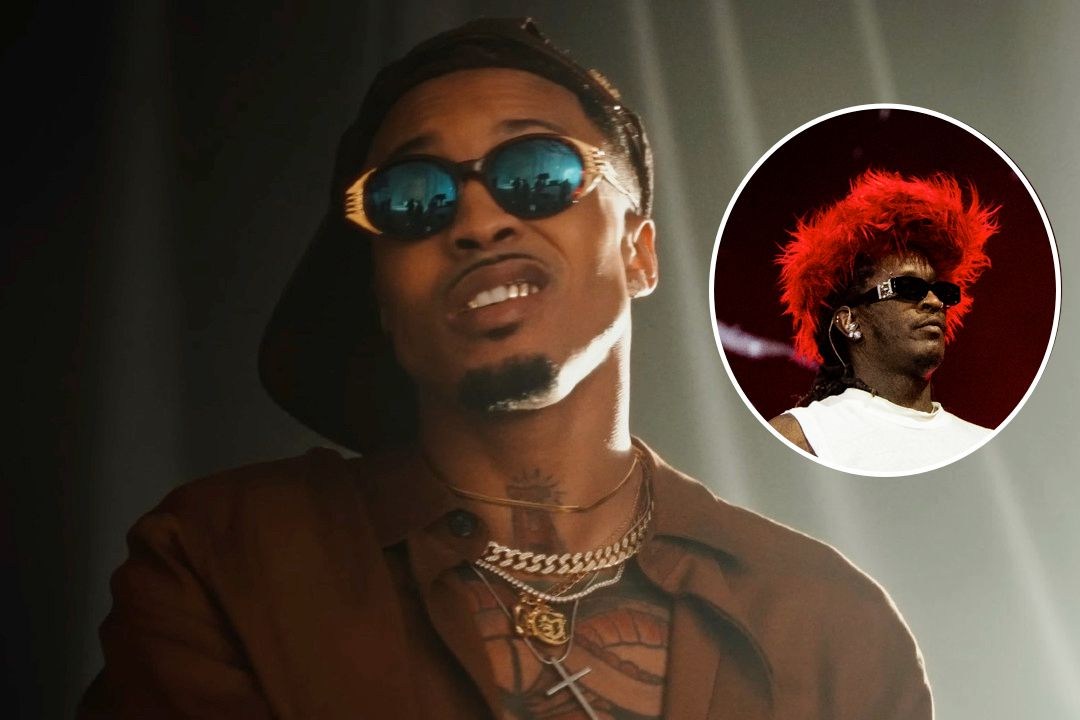
There is a stubborn conversation in hip-hop about how masculinity, loyalty, and sexuality intersect — and August Alsina just put a stake in the ground. During an Instagram Live on Tuesday (June 23), the singer publicly criticized comments made by Young Thug last September about men who come out later in life, calling the remarks personal and symptomatic of a narrower problem in the culture.
Alsina was responding to a clip from Thug’s September 2025 appearance on the Perspektives with Bank podcast, where the Atlanta rapper argued that men who come out after presenting as straight have violated a sort of unwritten man-code.
On the Live, Alsina didn’t soften his reaction. He said the clip felt like more than careless talk; it felt like a symptom. In his own words:
“That comment, I took personal because it’s like, a n**ga be crazy. It’s time to start calling out stupid. I don’t know why this should even be a conservation. Think about the idea that you saying you don’t respect somebody because they gay or whatever, because they turn gay or whatever. Why is this sh*t on your mind as a man that just got out of jail by the grace of God?”
“It’s so much you could be talking about, but this is the sh*t that’s on y’all mind. That tells me way more than I need to know about you, bro. That sh*t got y’all brain in a chokehold.”
The comments felt pointed: Alsina framed Thug’s words not as an isolated opinion but as evidence of a mindset that continues to preoccupy some corners of the music world — a mindset that, in his telling, says more about the speaker than the people they criticize.
On the Perspektives with Bank podcast episode, Thug tied the remark to larger questions about trust and identity, even invoking his well-publicized fallout with Gunna as context. He framed the issue as one of perceived betrayal:
“I feel like once you break a rule from your manhood, once you rat or once you turn gay,” he said, before adding that he has nothing against gay people and that he employs people from the LBGTQ+ community. “If I look at you, if I meet you and you gay, it’s like, ‘Okay.’ If I meet you and you portraying that you a man and you’re not gay, […] if you’re portraying a certain thing, I can’t look at you the same.”
Thug went on to insist he didn’t want the LGBT community to think he was antagonistic toward them, but doubled down on the language of codes and broken rules:
“I hate that I even brought it up, because I don’t even want the LGTB, I don’t even want that community to even think I’m against them. I’m overly with y’all for it. If I look at you like a man and we f**king b**ches together, girls together and we doing certain sh*t together, I’m looking at you in a man light. Then I find out you gay, it ain’t really nothing you can say to me. I’ma just look at you like you broke a man code.”
Those remarks landed in a scene already attuned to debates about authenticity, performance, and loyalty — especially after Young Thug’s highly publicized legal battles and his strained relationship with other Atlanta figures.
Part of why Alsina’s response reads with urgency is his own public history. In 2022, on the season finale of the reality show The Surreal Life, Alsina introduced a man named Zu and talked about love arriving “in a new way,” a move many interpreted as a coming-out moment. He continued to document his relationship with Zu on social media in subsequent years.
Then in 2024, when asked about labels on Nick Cannon’s platform, Alsina doubled down on a refusal to codify his heart: he said he won’t label who he loves, explaining that God had exposed him to many different kinds of people. That personal arc — from The Surreal Life to Nick Cannon and now to this recent Live — makes Alsina’s public response to Thug feel less like a hot take and more like a demand for a different kind of accountability from peers.
Speaking to a broader audience, Alsina’s critique is not just about one podcast clip. It’s a pushback against the ways certain attitudes get normalized in a genre that still wrestles with male codes and policing desire. Whether Thug’s comments were intended as a reflection, an explanation, or an apology, they landed in a moment when artists and fans alike are less willing to treat that language as incidental.
At minimum, the exchange underscores how ongoing conversations around masculinity and sexuality in hip-hop aren’t slowing down — and that public reckonings can come from unexpected places, like an Instagram Live on a Tuesday night.