Physical Address
304 North Cardinal St.
Dorchester Center, MA 02124
Physical Address
304 North Cardinal St.
Dorchester Center, MA 02124
After Drake's May 15 triple release, Florida rapper 1900Rugrat posted alleged DMs and accused Drake of using a beat from his Porch 2 the Pent intro on Iceman's "Little Birdie." Rugrat says a producer reached out over a year ago and he refused to give the song.
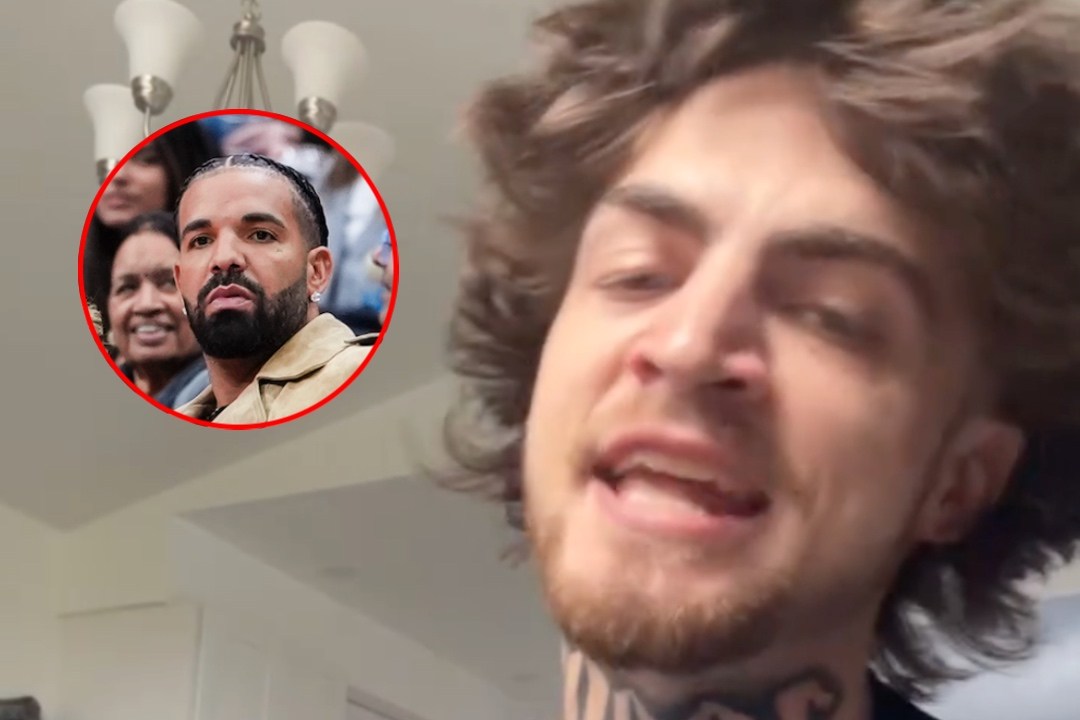
There are seasons in rap when one artist’s release becomes a mirror, and not always in flattering ways. Two days after Drake’s surprise triple drop, a Florida rapper named 1900Rugrat posted an Instagram rant that turned the usual album chatter into an accusation: he says a beat from his own project was used on Drake’s Iceman without his permission.
On Sunday, May 17, Rugrat shared what he called proof — alleged screenshots of DMs with someone he identifies as one of Drake’s producers — and a blunt, personal take on how things went wrong. The timing matters. Iceman, along with Habibti and Maid of Honour, landed on May 15 and was being parsed track by track when Rugrat claims he noticed the resemblance.
“Drake, you got me f**ked up, bruh,” Rugrat writes. “I sent over 10 tracks, and the one Drake was interested in was the song that wound up being the intro to my Porch 2 the Pent album. Now, the intro still dropped. I said, ‘No, you cannot have this song. He wanted me on his album still. He said I’ma send the verse to you. Never sent the verse. I didn’t give a f**k. Until I just went and listened to Iceman, and I listened to ‘Little Birdie.’ And I went back and listened to the intro on my first album.
That’s the only beat I’ve sat there and produced. Don’t rip my sh*t when we pitch it like that, fam. That’s fried out and f**ked up, twin.”
Rugrat’s narrative is tidy in its grievance: a producer reached out over a year ago, he sent dozens of tracks, he rejected a request to hand over a specific song, and then the allegedly offending track appeared in Drake’s project. He says he refused the placement; he says the promised verse never came. The screenshots he posted are presented as verification, though nothing yet verifies the DMs beyond Rugrat’s account.
Listen and judge: both tracks share a certain mood, an intimate, pitched-down loop and a sleepy high-register melody that sits over trap percussion. It is easy to hear why Rugrat felt the two beats lived in the same neighborhood. Whether that neighborhood is coincidence, shared sample, or the result of direct transfer is the crux of the conflict.
Elsewhere, Drake’s release strategy in May — three albums at once — has invited intense scrutiny. When a global superstar drops this much music in one weekend, the ears of the internet get especially hungry for connections, callbacks, and, yes, possible borrowings. High-profile albums have a way of surfacing smaller artists’ claims, some righteous and some spurious; this sits somewhere in that middle space for now.
Rugrat is not a complete unknown who suddenly surfaced. He has been building a localized reputation in Florida, and the intro he points to is the opening of Porch 2 the Pent, an album that mattered to his cartography as an artist. That ownership feeling is important to him; his post reads less like a lawyer’s filing and more like a frustrated producer watching familiar sounds show up under someone else’s name.
Speaking to the broader culture: hip-hop has long contained messy stories about beats, credits, and the blurry line between inspiration and appropriation. Producers and artists swap stems in DMs, labels move quickly, and sometimes clarity comes with a label credit or a public apology. Other times, it goes quiet.
At the time of writing, there has been no public response from Drake or his camp. That silence will be notable if the conversation escalates. For now, what remains is two tracks and a social-media dispute — plus the screenshots and Rugrat’s insistence that he had already said no.
It is worth noting how the medium shapes the argument. An Instagram post, a set of DMs, and a quick viral clip are the modern equivalents of a ceiling tile pulled down in the studio: messy, with shards and dust, but sometimes revealing. Rugrat’s anger feels raw and proportional to the claim; his certainty about production ownership comes through the way he repeats the timeline and the detail that he produced the beat himself.
Whether this becomes a formal sample claim, a credit negotiation, or just another internet dust-up depends on what evidence surfaces next. For readers who want to listen and decide, the tracks are out in the open. The moment is less about legal technicalities and more about how artists on different rungs of the industry ladder perceive fairness when sounds cross from one project into another.
Until someone speaks up with documentation beyond screenshots, the story sits where most modern rap disputes sit: loud, contested, and open-ended. Rugrat has put his version on record; the next move is Drake’s camp’s to make.