Physical Address
304 North Cardinal St.
Dorchester Center, MA 02124
Physical Address
304 North Cardinal St.
Dorchester Center, MA 02124
In a viral May 3 clip from a New York club, The Game called out 50 Cent — "Somebody tell Fif I'm here" — returning to a long-running rift rooted in their early G-Unit era and hits like "Hate It or Love It."
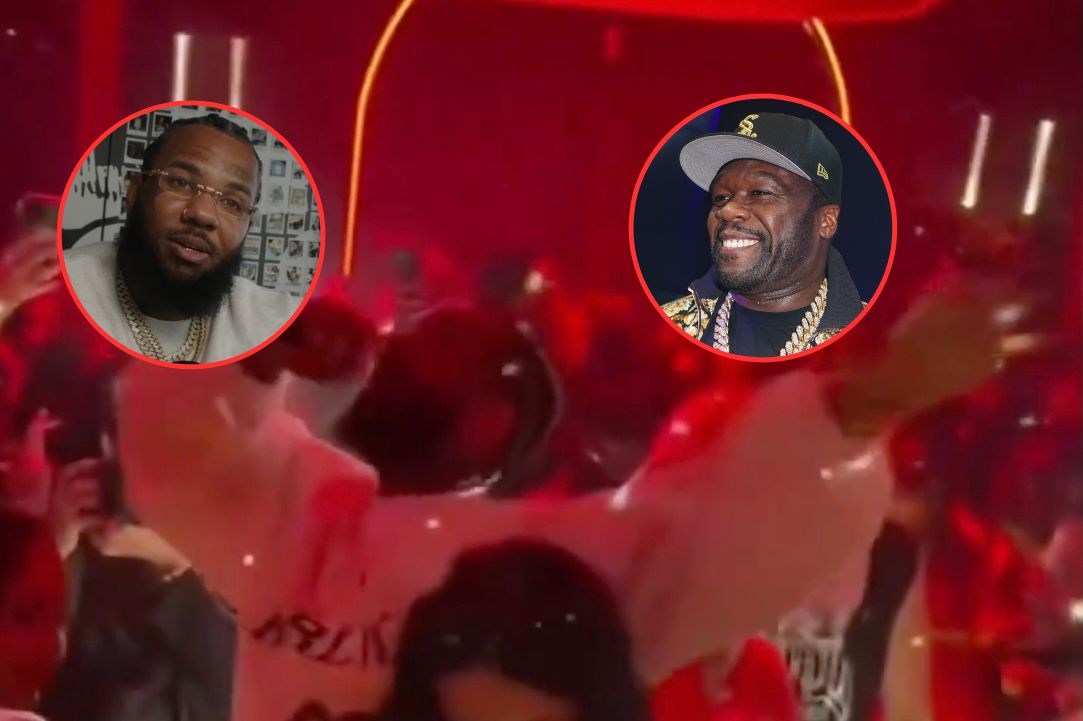
Nightlife in New York often doubles as a stage for unresolved chapters. Last weekend that stage hosted a late-night callback to one of rap’s most public fractures: The Game, shirt half-unbuttoned, arms raised, looking for 50 Cent.
A clip that surfaced on May 3 shows the Compton veteran cutting through a packed club, leaning into the microphone, and leaning into the history between him and his former G-Unit leader. He unloads with a mix of self-deprecation and provocation, the kind of off-the-cuff barbs that have kept this story in rotation for almost two decades.
“I got kicked out of G-Unit for doing stupid s**t,” he tells the crowd. “I’m just a f**ked up ni**a.”
Before any DJ cue could rescue the moment, Game pushed it a step further. He threw his hands up and demanded visibility: “Somebody tell Fif I’m here!” The line landed like a mic drop, the club’s lighting strobing around it as people recorded on their phones.
It wasn’t the first time Game has aired this particular grievance in public. At the Legends Only concert in Houston in September 2022, he used the stage to describe his ongoing disdain for 50 Cent in blunt terms. Speaking to that crowd, he said:
“I still don’t f**k with 50 cent, he’s a bi**h. Ain’t no cut with that ni**a. He’s a sucka. I’mma say it in Houston, I’ll say it in New York, I’ll say it anywhere…he’s a straight bi**h. And I like the TV shows, ni**a, put that on the internet.”
Those moments sit against a larger, more complicated history. The Game broke onto the mainstream in the early 2000s amid the G-Unit era, and The Documentary era cemented both his and 50’s status. Tracks like “Hate It or Love It” became part of that shared legacy — a reminder that their careers were once intertwined as closely as their catalogues.
Elsewhere, 50 Cent has been quieter on the public feud front but not entirely absent. Recently he posted an Instagram clip from Mary J. Blige’s Las Vegas residency, a casual performance video that used Blige’s “MJB da MVP” as soundtrack. Given the tangled web of early-2000s cross-pollination between hip-hop and R&B, the post felt like an odd, low-key footnote in a story that has been loud for years.
Listening to Game in that club, you notice two things: one, his remarks still read as genuine grievance more than manufactured controversy; and two, the ritual of calling someone out in public remains a currency in hip-hop. Fans cheered, phones hovered, and the moment went viral — not because it rewrites the past, but because it reiterates it.
Whether this latest outburst is a bid to provoke, to remind, or simply to be heard, it continues a pattern. For listeners who followed their early work, the exchange is less a surprise and more a continuation: two careers braided by collaboration and pulled apart by years of pointed remarks.
Speaking to the wider culture, the episode underscored how feuds age in public view — sometimes settling down, sometimes flaring up with the same handful of lines. The Game’s club call was loud. Whether 50 Cent responds or lets the moment stand as another beat in their long soundtrack is, for now, part of the story.