Physical Address
304 North Cardinal St.
Dorchester Center, MA 02124
Physical Address
304 North Cardinal St.
Dorchester Center, MA 02124
Isaiah Rashad told The Breakfast Club that the 2022 sex-tape leak forced him to reassess narrative control, responsibility, and life as a bisexual Black man. He frames the fallout as a lesson and a creative turning point tied to his album It's Been Awful.
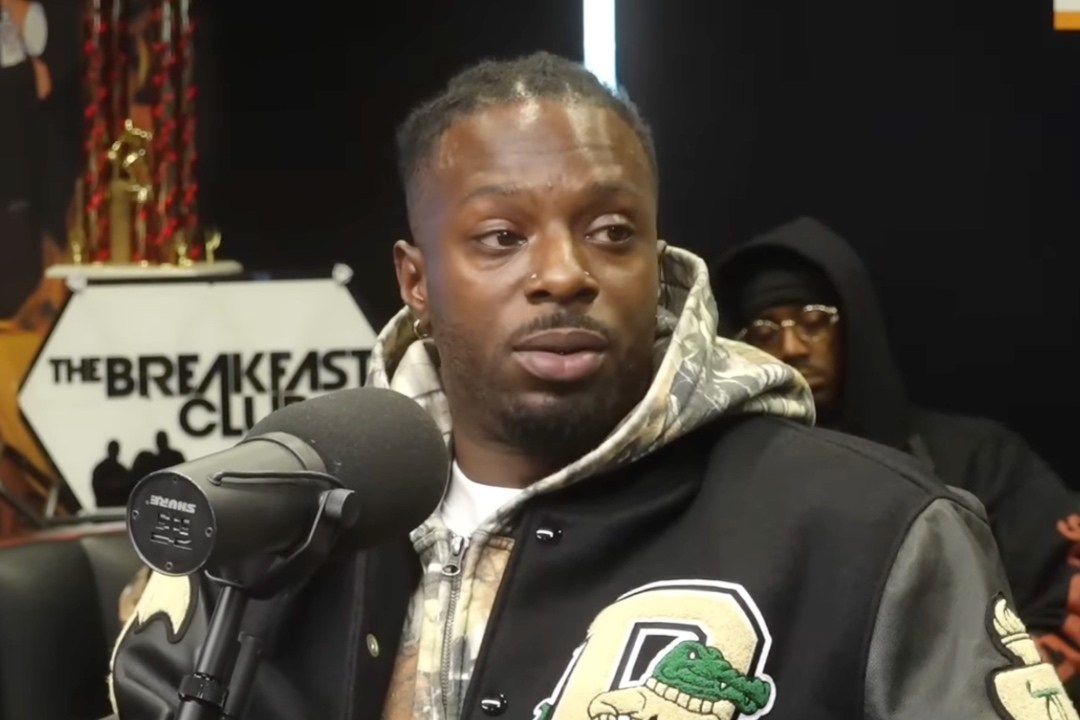
Hip-hop has been having a long, slow reckoning with intimacy and identity. In a culture that prizes toughness and unflinching control of your image, the fallout from private moments becoming public can change a life overnight — and not always on the artist’s terms. Isaiah Rashad sat down with The Breakfast Club on May 5 to map how one such moment forced him to rethink narrativity, responsibility, and the way he moves through the world.
The interview arrived in the context of a new record cycle for Rashad — his album It’s Been Awful — and a career that’s been punctuated by deeply autobiographical turns. He used the conversation to address the 2022 leak of a sex tape that featured him and another man, and the complicated freedom that came after the private became public.
“I’m blessed to how everything happened with me,” he told the hosts. “And the reception of everything. Because it allowed me to really step back and re-examine what I was doing. Regardless of how much I love myself, I still put myself in an irresponsible situation for anyone to control my narrative. At some point, I’ve accepted that they don’t make a manual for being a bisexual Black man. It was less hiding myself from anything, and more so not knowing how to not be ostracized.”
That line landed hard — a short sentence that opened up questions most artists in his lane rarely address on record. Rashad, who first broke through with 2014’s Cilvia Demo and later solidified his voice with 2016’s The Sun’s Tirade, has always mined vulnerability. But here he was naming the particular collision of race, sexuality, and the music industry’s appetite for controlling stories.
Speaking to The Breakfast Club, Rashad walked a tightrope between accountability and frustration. He acknowledged putting himself in a position where others could seize the narrative, while also critiquing the absence of cultural scripts for Black men who don’t fit straight archetypes. The interview read less like a confession and more like a status report: what happened, what he learned, and how he plans to keep pushing forward with his art.
Elsewhere, Rashad has been candid about how fans and peers reacted when the tape circulated. During his set at Coachella in April 2022, he thanked the crowd for messages that helped him through the immediate fallout, telling the audience, “I’ve seen y’all messages and all that shit, all the positivity. Y’all kept me alive these last couple months.” In the months after, he publicly described himself as sexually fluid, a label he’s returned to in interviews and social media.
Much of the conversation on The Breakfast Club circled back to control. Rashad discussed how the leak forced a re-evaluation of his social presence and the ways he communicates in a space that often rewards spectacle. He framed the experience as a lesson in narrative ownership — not a tidy resolution, but an ongoing project.
For listeners who have followed Rashad since his early mixtapes, this is the latest moment in a career defined by slow revelation. The music remains his primary language: It’s Been Awful is an attempt to turn the maelstrom into material, to translate private disorientation into craft. Whether audiences will meet him where he’s headed depends as much on industry attitudes as on the songs themselves.
Rashad’s interview is a reminder that conversations about sexuality in hip-hop are overdue and imperfect. They are also deeply personal. As he put it in the sit-down, the lack of a roadmap isn’t an excuse — it’s a condition to be named and lived through, one verse at a time.
Watch the full conversation to hear Rashad unpack the album and the aftermath in his own words.