Physical Address
304 North Cardinal St.
Dorchester Center, MA 02124
Physical Address
304 North Cardinal St.
Dorchester Center, MA 02124
A Tampa jury on May 8 convicted Isaiah Chance, Sean Gathright, Rashad Murphy and Davion Murphy of first degree murder and related counts in the June 23, 2024 killing of Jacksonville rapper Foolio. The penalty phase was set to begin May 11, with prosecutors seeking death sentences.
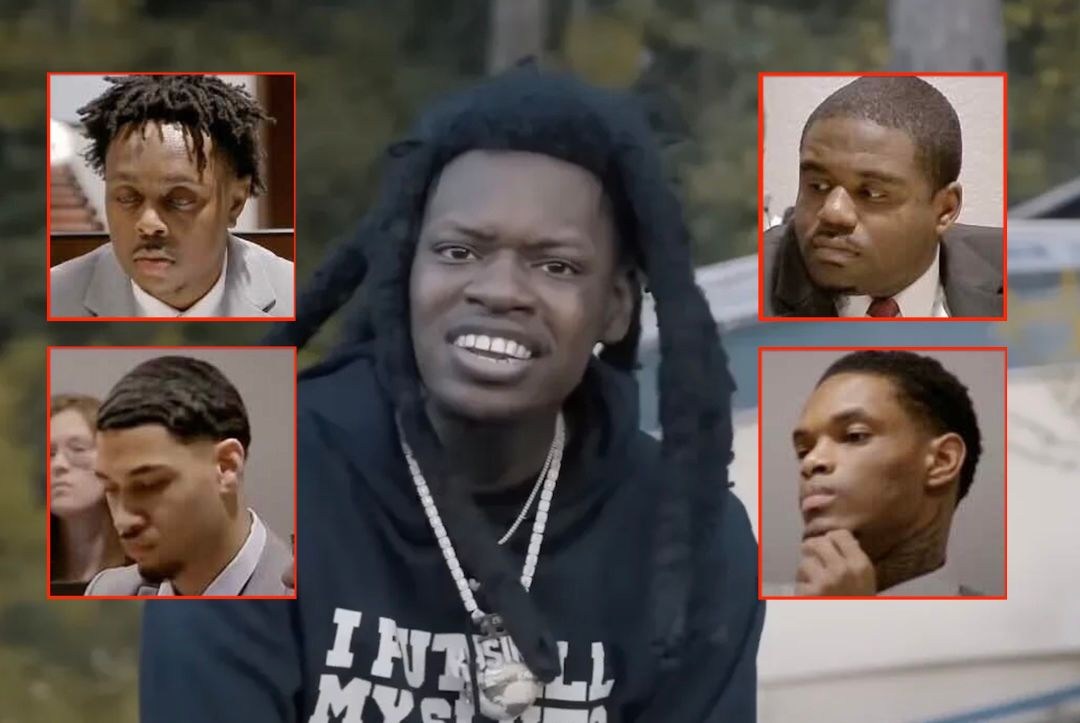
Violence has been a recurring, ugly footnote in the story of modern hip hop, and this week another chapter closed in a Tampa courtroom. After a monthlong trial, a jury returned guilty verdicts on May 8 for four men accused in the killing of Jacksonville rapper Foolio, a figure who, until his death, was a known presence on Florida’s local scene.
The jury in Tampa convicted Isaiah Chance, Sean Gathright, Rashad Murphy and Davion Murphy of first degree murder and conspiracy to commit murder. Deliberations took about eight hours before the panel delivered the verdicts, according to reports from the Tampa Bay Tribune.
‘Prosecutors proved in court that Isaiah Chance, Sean Gathright, Rashad Murphy, Davion Murphy and Chance’s girlfriend, Alicia Andrews, planned and executed a mission to stalk and kill Foolio while he was celebrating his birthday in Tampa on June 23, 2024. Gathright, Rashad Murphy and Davion Murphy were captured on surveillance video firing automatic weapons at a parked car that Foolio was sitting in in front of a Holiday Inn.’
That surveillance footage, played multiple times during the trial, was the clearest through line for jurors: three people opening fire on a parked vehicle, the rapid flashes of muzzle fire, the aftermath. Prosecutors told jurors that Chance and Andrews supplied the trio with Foolio’s whereabouts, turning what might have been a spontaneous act into a planned hit.
Beyond the murder convictions, the jury found Gathright and both Murphys guilty of attempted second degree murder for injuring others at the scene. The panel also agreed with the state that Chance and the Murphys were affiliated with a gang and that the shooting was connected to gang activity, a finding that carries weight at sentencing.
Now attention shifts to the penalty phase, which was scheduled to begin on May 11. The prosecution has indicated it will seek death sentences for the four convicted men. Florida death-penalty cases are procedurally heavy; the next weeks will be about arguments designed less for persuasion than for framing how jurors perceive culpability and mitigation.
There is a separate, related thread to this case. Alicia Andrews, who prosecutors say helped facilitate the attack, was convicted of manslaughter last November and is awaiting sentencing. Her conviction reduced the number of defendants facing first degree murder counts to four, but her case has remained a visible part of the public record.
For the local community and for anyone who followed Foolio’s music, the trial was wrenching in part because it reconstructed the last hours of a messy, public killing. Friends, family and fans watched testimony that doubled as a forensic re-telling: phone pings, surveillance clips, neighborhood witnesses called to the stand. The courtroom routine felt, at times, like reading a police blotter aloud — and like many of those blotters, it landed bluntly.
Elsewhere, the verdict feeds into a larger conversation about violence in hip hop and how public narratives treat victims and defendants. Foolio was one name among many young Black artists whose deaths have prompted both mourning and scrutiny. Reporting in outlets that followed the trial repeatedly noted the way local rap scenes intersect with social dynamics that extend well beyond music.
Speaking to the broader pattern does not excuse the specifics of this case, which prosecutors said were coldly planned and executed. The coming penalty phase will test whether the jurors find sufficient aggravation to impose the harshest punishments the state can request. For those who watched Foolio’s rise on SoundCloud and local playlists, the trial offered a grim counterpoint to the music he left behind.
The legal process will continue; for now the convictions stand. Families will prepare for sentencing hearings, prosecutors will file their arguments, and a city that had already been through too much will have to reckon with another verdict and what it means for justice, memory, and the small, tight-knit communities from which many of these artists emerged.