Physical Address
304 North Cardinal St.
Dorchester Center, MA 02124
Physical Address
304 North Cardinal St.
Dorchester Center, MA 02124
During closing remarks on Day 10 of Foolio's murder trial, suspect Davion Murphy was removed in handcuffs after a loud exchange with a co-defendant. The trial, tied to the 2024 shooting of the Jacksonville rapper in Tampa, moves to jury deliberation on May 11.
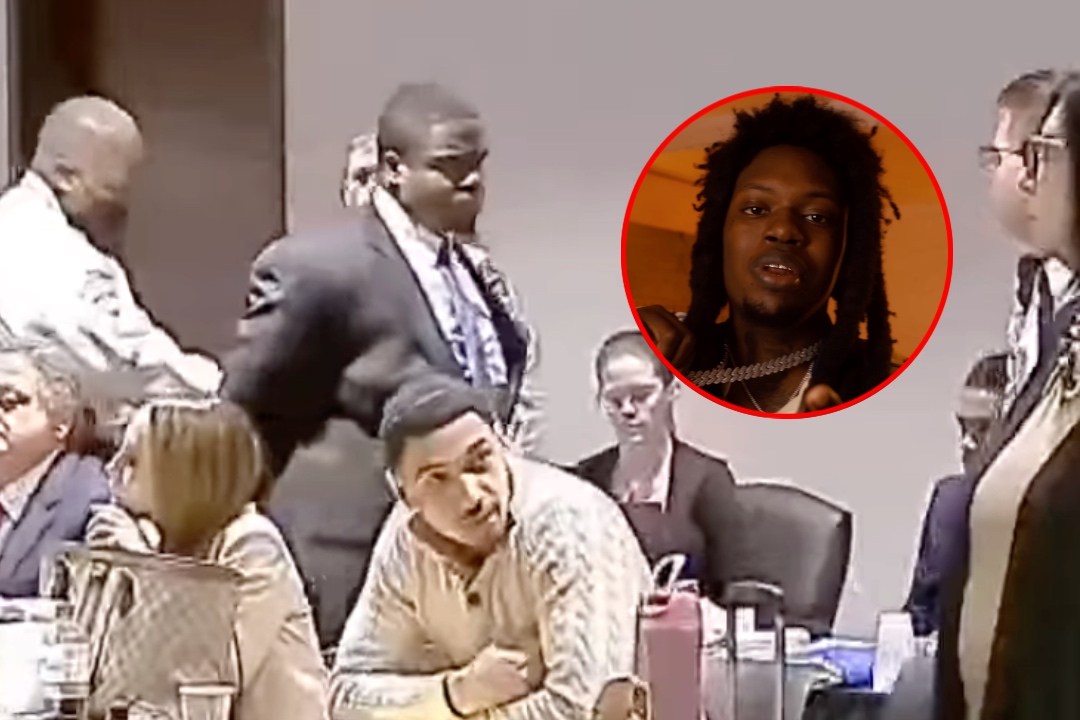
The courtroom at the Duval County courthouse felt smaller than it was on Thursday, the kind of room where you can hear a sneaker squeak and a sob at the same time. What was meant to be closing remarks from Judge Michelle Sisco on Day 10 of the trial over the killing of Jacksonville rapper Foolio turned, abruptly, into a domestic scene: whispered recriminations between defendants, a judge trying to keep order, and then, eventually, handcuffs.
As Sisco addressed the court on May 7, prosecutors and family members sat in mute rows, and one of the men charged in connection with the 2024 shooting, Davion Murphy, began a tense back-and-forth with a co-defendant. Video from the proceedings shows Murphy’s voice cut across the room. He said, “Stop talking to me. You don’t love me, ni**a.” The judge issued a stern warning.
“Mr. Davion Murphy may need to be removed if he can’t stop talking,” Judge Sisco warned. “Please stop. You are not helping your situation.”
Murphy ignored the admonition and, within minutes, bailiffs stepped forward, secured his hands and led him from the courtroom in cuffs. The moment was small and loud: a man escorted out under a judge’s command, the hum of cameras and whispered commentary in the back row. The judge reconvened the court the next day and gave standard instructions to jurors; deliberations were set to begin on May 11.
Elsewhere in the case, four men—Murphy, Sean Gathright, Rashad Murphy and Isaiah Chance—face charges of premeditated murder in the July 2024 slaying of Foolio. Prosecutors say the group followed the Jacksonville native to Tampa, where the rapper was celebrating his birthday, and shot him outside a Holiday Inn. Authorities have tied the killing to a broader gang feud that has simmered through Jacksonville’s streets.
One defendant already met a verdict: last November, Alcia Andrews was convicted of manslaughter after prosecutors said she and Chance trailed Foolio in Tampa and relayed his location to the others. She is awaiting sentencing.
For people who knew Foolio’s music, the trial is a reminder that the rhythms of local rap scenes—late-night runs, block conflicts, boasting on tracks—don’t stop at the studio door. His death landed as a blunt punctuation mark for Jacksonville’s hip-hop community, a generation of artists and fans watching a case that ties together grief, retaliation and the legal system.
Speaking to courtroom dynamics, lawyers for the defense have argued differing motives and degrees of involvement; prosecutors insist the killing was deliberate. How jurors interpret a moment like Murphy’s removal—outbursts, gestures, the optics of being led away—will be part of that calculus. In high-profile cases tied to music scenes, small courtroom behaviors can loom large in public perception even if judges insist jurors look only at evidence.
There is a grim choreography to these proceedings: witness lists, forensic testimony, video and witness statements stacked day after day. The handcuffing on May 7 is only one beat in a trial that will decide whether four men face the harshest penalties the state can impose. For those who followed Foolio’s rise, the trial has also been an unwelcome coda—the legal machinery trying to translate a death into verdicts and, eventually, sentences.
Jurors began deliberations as scheduled on May 11, carrying with them the courtroom memory of a judge’s warning and a defendant’s abrupt removal. In cases like this, the smallest moments often outlast headlines: a voice across the aisle, a scuffed floor, a pair of cuffs closing with a distinct, final click.