Physical Address
304 North Cardinal St.
Dorchester Center, MA 02124
Physical Address
304 North Cardinal St.
Dorchester Center, MA 02124
Nicki Minaj told Time that repeated swatting at her California home and what she describes as a lack of response from state officials pushed her to stop hiding support for Donald Trump — a break from the expected political script in music.
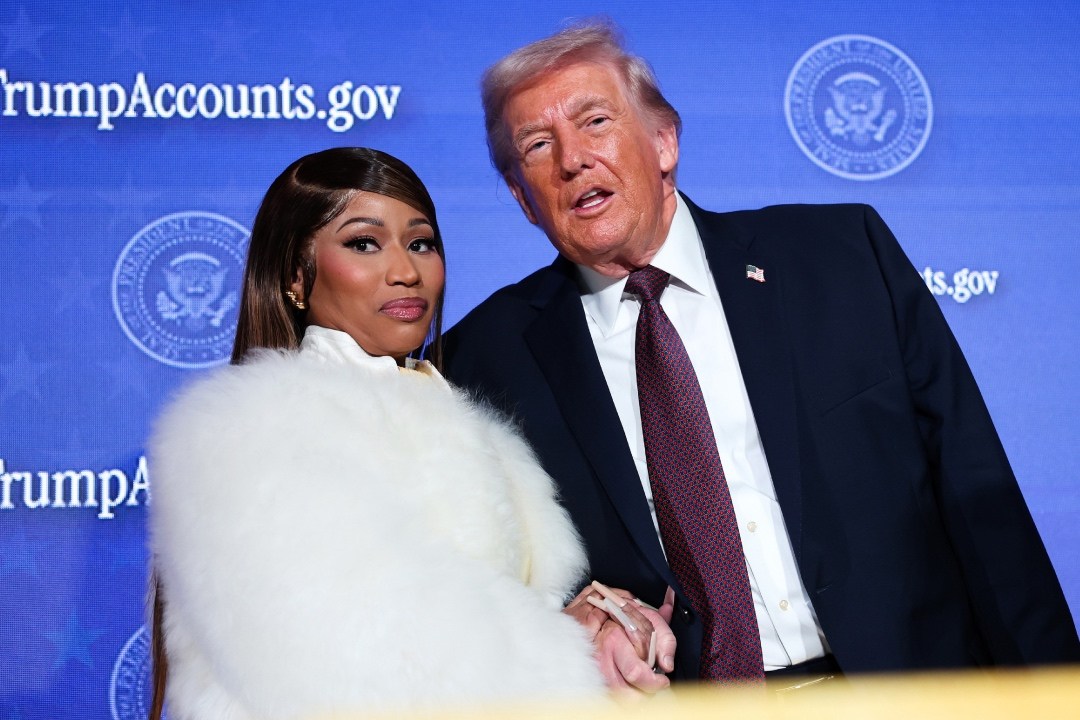
Politics and pop culture have always shared a messy, performative border, but every so often the line blurs in a way that feels less theatrical and more personal. That’s the frame Time used on May 13 in a piece tracing how Nicki Minaj — the Queens-bred rapper who spent years operating within an industry that assumes a Democratic consensus — quietly shifted into an outspoken supporter of Donald Trump.
The article stitches together two strands: a 2021 moment when Minaj pushed back against vaccine messaging and the later, darker series of incidents that she says pushed her to stop hiding her sympathies. For much of her career, Minaj has managed public life with a mix of provocation and calculation; that mixture is part of what made her an anomaly when she broke from the expected political script.
Nicki told Time that she had long liked some of Trump’s politics but kept that preference private for fear of alienating fans and industry allies. “I felt that way already about him, just that I didn’t dare act like that publicly,” she said. “It’s been ingrained in everyone’s brain in the music business that we are supposed to be a Democratic family. I just knew they would not like me supporting Trump.”
“Democrats’ treatment of Nicki Minaj should be all the proof you need that they don’t care about Black people, especially those they can’t control,” Charlie Kirk tweeted. “They just use them every four years for their votes. But people are waking up.”
That Charlie Kirk tweet, and his public defense of her after the vaccine controversy, is presented in the piece as an accelerant. But the clearest hinge, at least in Minaj’s telling, was a string of swatting calls aimed at her California house — incidents in 2022, 2023 and again in 2025 that resulted in police showing up after false 911 tips. According to Time, when Minaj reached out to California’s governor she felt stonewalled; a Republican politician stepped in to help. “That’s what made me say that I don’t care to keep this a secret anymore,” she told the magazine.
It’s worth parsing how unusual that revelation is. Celebrity talk about political preference can be performative or strategic; here, Minaj frames the move as defensive, the result of feeling unprotected by state power and politically abandoned. There’s also the cultural context: Black entertainers have long been expected to toe a particular line, especially around presidential politics. Minaj’s decision to broadcast her alignment with MAGA upends those expectations in a way that will make a lot of people — fans, industry figures, pundits — calculate differently about her brand and reach.
Elsewhere in the piece, Time recounts how Minaj has stopped being coy. In the past year she’s spoken at events and attached herself publicly to the movement in ways that would have been unthinkable for many of her generational peers. Whether that will change how radio programmers, festival bookers, or collaborators think about her is an open question; the industry is both profit-driven and risk-averse, and Minaj’s profile complicates the calculation.
Listening to her story, there’s a human-sized remainder beneath the headlines: a performer from Queens who built a global career on bluntness and reinvention but who also responds to fear the same way anybody would. Swatting is not a political abstract; it is danger at your doorstep, and that shift in stakes makes the rest of her argument — about loyalty, silence, and being castigated by a political base — feel less theatrical and more immediate.
Speaking to Time, Minaj made the point plainly: staying quiet costs you safety and honesty in different ways. The conversation around her political realignment will now live at the intersection of celebrity culture wars, public safety, and the transactional nature of party politics. For a figure accustomed to controlling the narrative through verse and image, this is the rare moment where the narrative seems to have pushed back.
There will be columns and think pieces. There will be hot takes from every corner. But beneath the spin, the Time piece leaves a specific line of cause and effect on the table: Minaj says she felt abandoned in a moment of danger, and that feeling helped turn private alignment into public allegiance.