Physical Address
304 North Cardinal St.
Dorchester Center, MA 02124
Physical Address
304 North Cardinal St.
Dorchester Center, MA 02124
Drake's Iceman, released May 15 alongside two other projects, reads like a ledger: pointed bars aimed at the 'Big Three,' Jay-Z, Rick Ross and producers. Across icy production he dismisses past shots, measures relevance by hits and reasserts narrative control.
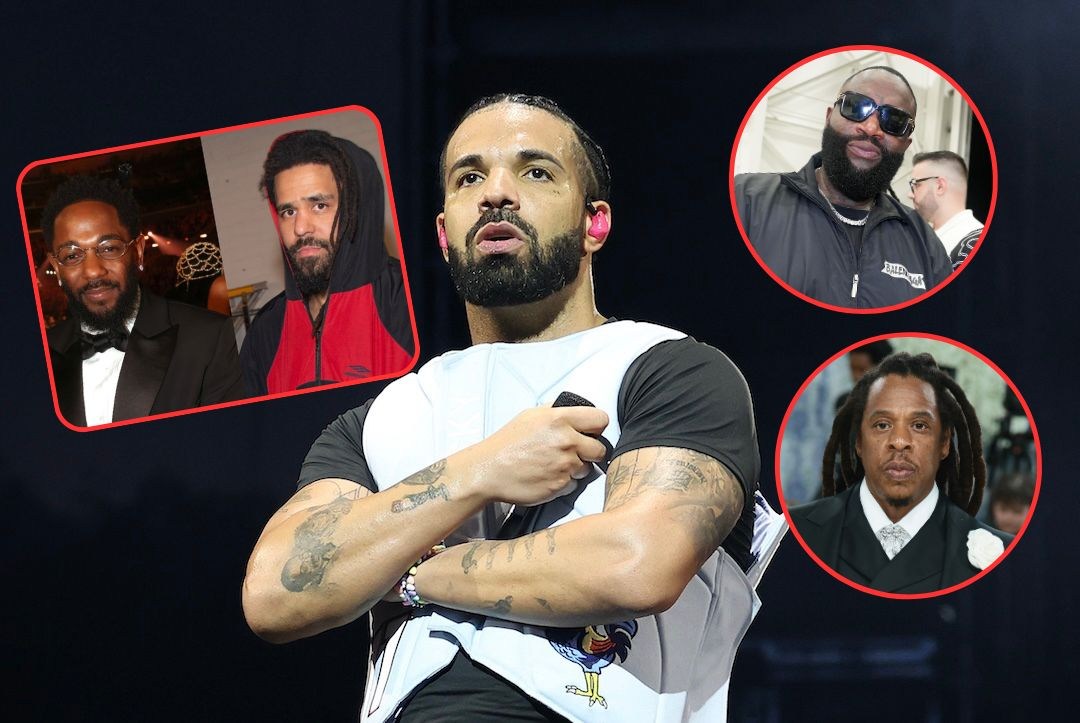
There was nothing tentative about the way Drake started the weekend. On Friday, May 15, he dropped three bodies of work at once — Iceman, Maid of Honour and Habibti — and it was the coldest of the three that immediately set the room on edge. Iceman arrives like a record that wants to clean house: sparse, gleaming production and a series of pointed lyrical moments aimed at peers and predecessors. It reads less like a reconciliation and more like inventory-taking.
From the opening sequences, Drake frames himself against the idea of the so-called “Big Three” — a recent shorthand for him, J. Cole and Kendrick Lamar — and refuses the comfort of any shared notion of grandeur. On “Make Them Pay,” he shrugs off the collective, flattening a myth with a single, efficient bar.
“F**k a big three anyway there was too many chefs in the kitchen/It was a mess to begin with,”
The line lands like a warmed-over diss wrapped in casual distance: not rage so much as exhaustion. Production on “Make Them Pay” is clinical — high hats like frost on a window, a bassline that keeps its distance. When Drake speaks like that, the performance is half insinuation, half weather report.
He returns to Kendrick more bluntly across the album. On “Dust,” Drake claims the Compton rhymer’s shots at him didn’t stick — a strange kind of erasure that tries to neutralize past attacks by rendering them forgettable.
“What was the year you said you had slaps, cause I don’t remember it going like that, I don’t remember one word of your raps,”
It’s not just about who hit who harder; it’s a maneuver to reassert narrative control. By saying he doesn’t remember, Drake flips the script: not only will he not react, he will decide what counts as history.
Elsewhere on Iceman Drake turns his attention to figures outside the Kendrick/J. Cole orbit. On “Make Them Pay” he invokes Rick Ross in a line that glances back at streaming-era alliances, then calls out DJ Khaled for what the song suggests is silence on Palestine. The album is peppered with these sideways checks — not always full-blown feuds, but small legalisms of a long-span career.
“Dog, I was aiding Ross with streams before Adin Ross had ever streamed… And your people are still waiting for free Palestine/But apparently everything isn’t black and white and red and green,”
Jay-Z, too, is folded into the record’s peripheral grievances. On “Whisper My Name,” Drake sounds like a man who has tried the mentorship lane and found it wanting: “I’ll take $500k, not the dinner, I never could learn sh*t from none of y’all,” he snaps — a line that reads like an autobiography compressed into a single ledger entry.
He doesn’t spare producers. “2 Hard 4 The Radio,” a riff on Mac Dre’s title, name-checks Mustard in a way that reduces the Los Angeles hitmaker’s currency to nostalgia for past singles. The bar ties Mustard’s relevance to measured streaming tallies and a specific moment — “Rack City” — as if to say: hits are the only language that lasts.
“Mustard heard about us, gotta catch up to the slaps, you ain’t had one since me and YG rapped… Facts/nine hundred million for the tracks/ ‘Rack City,’ bi**h, we remember that/Yeah, you should try and get back to that.”
As a piece of artistry, Iceman is less interested in subtlety than in setting a ledger straight. There are polished moments — Drake’s ear for melody remains intact — but the record’s mood is bruised and businesslike. He measures enemies by their echoes, by whether their lines and their public stances survive the day.
Speaking to Drake’s longer arc, this is not the first time he’s used a record to recalibrate relationships. He has always been adept at turning personal disputes into public theater, from mixtape-era potshots to chart-clearing rebuttals on streaming-era singles. What feels new is the relentlessness: instead of a single track or two, several cuts across Iceman carry the same file of grievances, different angles on the same theme.
Whether these lines will provoke responses — public or musical — is another matter. The rap world has cycles: heated, then cold, then heated again. For now, Drake has chosen cold clarity. He catalogues, he dismisses, he recalls. He numbers the hits, remembers who helped, and who didn’t. And then he lets the record do the talking.
For anyone following the long-running tensions between these artists — Kendrick, J. Cole, Jay-Z, Rick Ross, the producers around them — Iceman is a document worth parsing. It won’t unify opinions, and it won’t close chapters; it will, however, make a lot of people listen a little harder.