Physical Address
304 North Cardinal St.
Dorchester Center, MA 02124
Physical Address
304 North Cardinal St.
Dorchester Center, MA 02124
Latto told The Breakfast Club she put Cardi B on blast in "Gimmie Dat" after a leaked 2025 call; Cardi responded on X, saying she apologized publicly and tried to reach out privately. The exchange raises questions about private repair versus airing grievances on record.
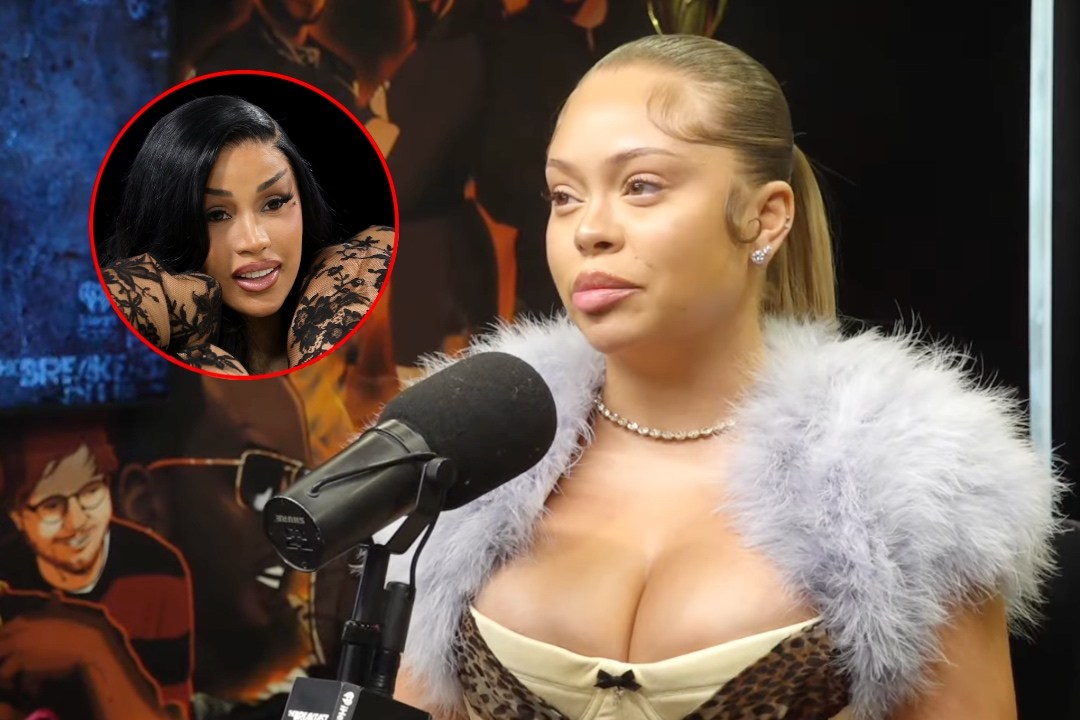
Rap is a small world and it keeps getting smaller when private words leak into public timelines. What began as an off-air argument that slipped into the internet in 2025 has turned into the opening stanza of Latto’s new album, Big Mama, and a back-and-forth that unfolded on morning radio and social media this week.
On Thursday, June 4, Latto sat down with The Breakfast Club and confirmed what listeners had already suspected: the barbs directed at Cardi B on the track “Gimmie Dat” were not accidental. She framed the verse as a reaction to a moment she felt was mishandled — a slur uttered during a leaked phone call that had been followed by a public apology, but no immediate private outreach.
Latto described the timing in a way that made the hurt feel more concrete. She said she was early in her pregnancy when she hurried into the studio to lay down a verse for the “ErrTime (Remix).” Two days later, she saw herself being called “pu**y” across timelines and headlines. That indignity is what she says pushed her to put the dispute on record.
“I was at an early stage in my pregnancy,” Latto told the hosts. “I rushed to the studio to do a verse for [\”ErrTime (Remix)\”] and literally like two days later, I see all over the internet that I’m being called pu**y.”
On “Gimmie Dat,” Latto folds the moment into a verse that mixes offense, wealth flexing, and a little theatrical indignation. The lines namecheck a public apology and even a purse offer, but Latto turns those gestures into a point of defiance rather than reconciliation.
“B**ch said what? Let’s clock it/Really got a Hermès store in my closet,” she raps. “Talkin’ ’bout buyin’ big mama a bag like my ni**a ain’t already bought it/Like my ni**a ain’t comin’ off racks/Big bank over here, big facts/Wish a b**ch would get in that booth/I’m callin’ up PlaqueBoyMax.”
Elsewhere, Cardi B took to X on Friday with a longer, more explanatory response. She reiterated regret, tried to frame the original comment as something she did not mean, and described multiple outreach attempts after the call leaked. The post reads less like a single-sentence PR mea culpa and more like a timeline of failed reconciliation attempts.
“I truly understand how you feel…and that’s exactly why I chose to apologize publicly because the disrespect became public,” Cardi wrote. “On that call I didn’t even mean to call you that, I didn’t mean any harm.. There’s a difference in what I said vs what I meant.
“What I could have said was you was too forgiving and gave too much mercy in that situation.. But it was a heated conversation and I let my mouth get the best of me. When the call came out I was eight months pregnant, had just released my album, and was extremely overwhelmed and emotional. Thats not to excuse what I said but to let you know where I was in my head. I genuinely felt bad about what happened.”
“In 2025 and 2026 I made multiple attempts to connect…I spoke with your manager, your sister, and even texted you directly to take full responsibility. I always had love and respect for you ! I always wanted to make it right but making it right looks different for the both of us… I wanted to connect with you but you wanted to address it on your album.”
That line about attempts to connect is important. It reframes the dispute as not just performative callouts but as a clash over how and where accountability should happen. Latto chose to air the grievance in her music; Cardi says she tried to settle it privately and that she had been managing her own life upheaval when the call went public.
There is no neat resolution here. Both moves are familiar in modern hip hop: a leaked conversation becomes a public wound, a public apology looks different from a private one, and an album becomes a forum for settling scores. Latto turning the experience into a verse is consistent with a long lineage of artists who use record time to turn personal slights into cultural moments. Cardi’s explanation reads like someone trying to contextualize a misstep in the middle of other pressures.
Speaking to the pattern matters because this is not just about two personalities; it is about what counts as repair in an era when every private slight has potential public afterlife. For now, the exchange lives in lines and posts: a verse on Big Mama and a thread on X. Whether it mutates into a conversation that actually resolves anything or simply fuels headlines is still up in the air.
Watch Latto’s Breakfast Club conversation and Cardi’s X post and judge for yourself. Both artists have histories of turning personal footage into public narratives, and both moves feel strategic in different ways. The song lands like a final draft of a feeling Latto had been sitting with; the reply reads like an attempt to undo a misread in real time. Neither cleans the slate completely, but both remind us how intimate and performative these moments have become.