Physical Address
304 North Cardinal St.
Dorchester Center, MA 02124
Physical Address
304 North Cardinal St.
Dorchester Center, MA 02124
A May 28 video from Chris Long reopened a quiet corner of Juice WRLD’s life: promotional McDonald’s cards the late rapper never used, 12 reloadable cards found after his death, and a Postmates bill Long says topped about $100,000 a month.
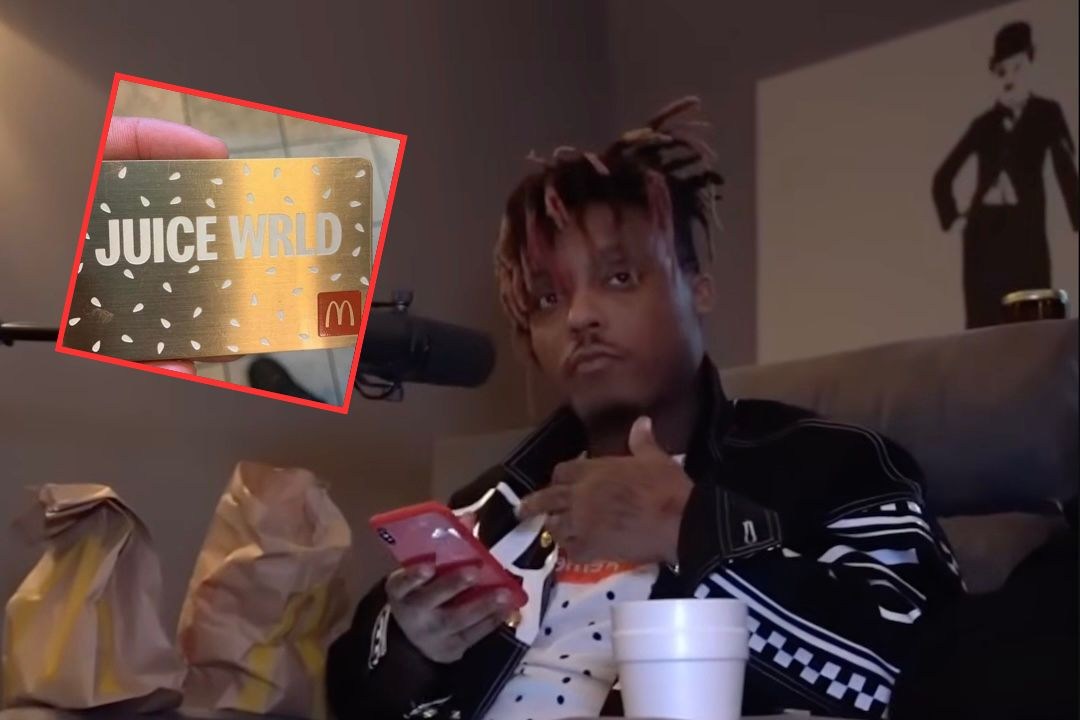
It is a particular kind of celebrity afterlife when a video of a late artist chewing a McDonald’s sandwich resurfaces and suddenly feels like a primary source for how they lived. On May 28, videographer and longtime friend Chris Long uploaded a clip to his YouTube channel of Juice WRLD listening to the unreleased track “Sticks” while eating a McDonald’s meal. The frame is banal in the way that real life is: headphones on, a paper bag on the table, the rapper bobbing his head. That banality turned into an odd little excavation when a fan asked about the golden McDonald’s cards Juice reportedly had.
Chris answered in the comments, and his reply turned the clip into a minor dossier on celebrity consumption. “He never used those McDonald’s cards once,” Chris wrote. “He got them and forgot about them. I found them after he passed. Our Postmates bill was like 100k a month.”
He never used those McDonald’s cards once. He got them and forgot about them. I found them after he passed. Our Postmates bill was like 100k a month.
That short exchange reveals two contrasting habits. On one hand, there was the official, promotional artifact: a gold McDonald’s card given to Juice WRLD during a partnership with the chain. On the other hand, there was a relentless, late-night backchannel of delivery apps. Chris clarified that those gold cards were not, in fact, infinite passes for free food for life. They were reloadable plastic cards preloaded with roughly $600 each. He says he discovered a stack of 12 unused cards among the belongings the Chicago-born rapper left behind. Twelve cards at $600 a piece, by that count, is a tangible sum, but still dwarfed by the six-figure monthly Postmates bill Chris mentions.
The gold McDonald’s card had already circulated in the collector market. In January, one such card ended up on eBay, where a buyer shelled out $2,700. The eBay listing’s seller claimed the card still worked and described it as one of the most iconic pieces of Juice WRLD memorabilia. Whether the card was prized as a devotional object, a curiosity, or a flex, the sale exposed how quickly promotional gestures can turn into collectible relics once an artist dies.
There is an uncomfortable comedy to the picture Chris paints. Juice WRLD, the late Jarad Higgins, was a figure of contradictory appetites. His music—anchored in confessional melodies and an emo-rap sensibility that made “Lucid Dreams” a summer soundtrack—often read like a chronicle of excess: substances, heartbreak, life on the move. The image of him forgetting a stack of McDonald’s cards while accruing a six-figure delivery bill humanizes that excess in a small, precise way. It is not glamorous. It is not cinematic. It is domestic and messy.
Elsewhere in the thread, Chris’ tone is matter of fact, the kind of practical honesty you would expect from someone who spends his life filming a friend. Finding those cards after Juice WRLD passed away reframes them, too. What was once an everyday perk becomes inventory. What was once a private convenience becomes public anecdote and eventually, if market forces are at work, a $2,700 eBay listing.
Fans will parse these stories for what they reveal about an artist’s life. For collectors, a gold McDonald’s card is more than plastic; it is provenance. For friends and collaborators like Chris Long, it is evidence of a routine interrupted. And for the rest of us, the image of a young artist surrounded by food delivery receipts is oddly clarifying. It strips away the rhetorical gloss of celebrity and leaves a simple ledger: cards unused, $100,000 a month spent on delivery, a friend who remembers and tells the story aloud.
Chris Long’s clip does another thing. It insists that memory is messy, and that artifacts mean different things to different people. The cards were promotional tools, then forgotten objects, then collectible ephemera. The Postmates bill is a line in a long, complicated ledger. And the video of Juice WRLD listening to “Sticks” while holding a McDonald’s sandwich remains, in the end, just a quiet domestic moment that now carries more weight than it did the day it was shot.