Physical Address
304 North Cardinal St.
Dorchester Center, MA 02124
Physical Address
304 North Cardinal St.
Dorchester Center, MA 02124
A leaked Lil Baby clip and a combative X thread from DJ Akademiks pulled multiple Atlanta stars into a public squabble. Akademiks accused Lil Baby, Young Thug, Gucci Mane and Gunna of being "rat rappers," responding to a filmed diss with an extended call-out and a mocking image.
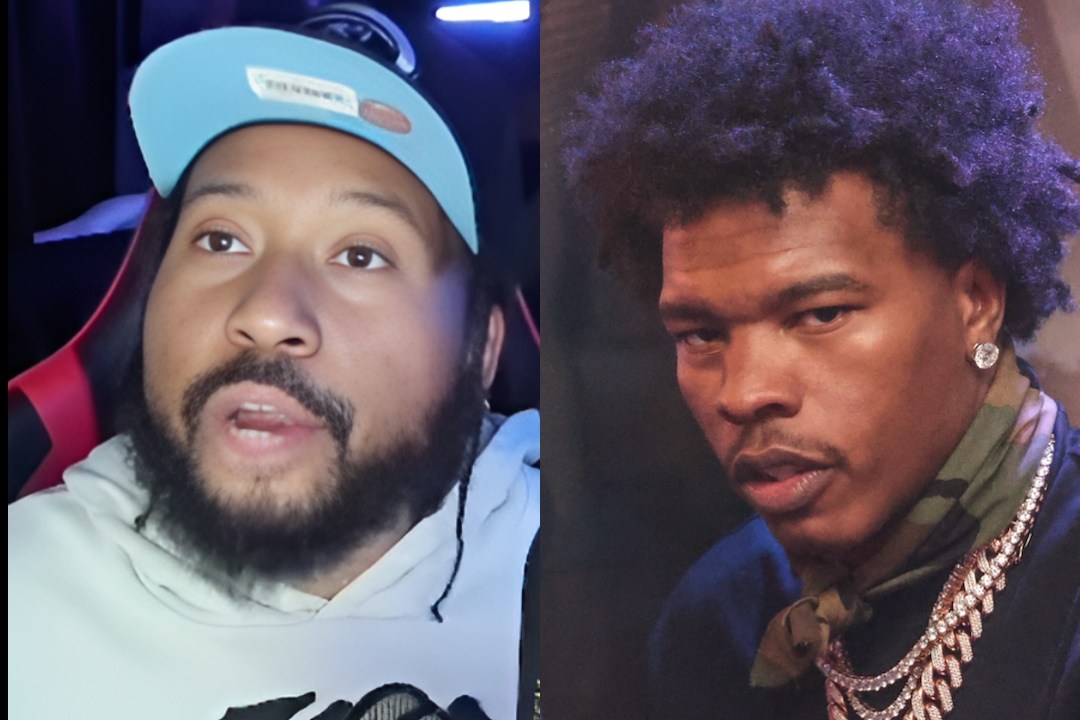
Social-media feuds have a way of boiling over into the broader story of hip-hop now: a clipped lyric, a screenshot, a caption, and suddenly reputations are being rearranged in public. On June 8 the latest flashpoint arrived in the form of a leaked music-video snippet and a long, combative thread from DJ Akademiks that pulled several of Atlanta’s most visible stars into the same orbit.
The clip shows Lil Baby on a street in France shooting what looks like a video, mouthing a line that landed like a provocation: “F**k Akademiks, that ni**a the feds.” It wasn’t a throwaway diss — it was direct, filmed, and then circulating within hours, which is the currency of modern beef.
Akademiks answered on X the next day, not with a single line but with an extended call-out that folded Lil Baby into a broader indictment of his city. In a post that reads like part manifesto, part taunt, he wrote:
Lil baby. And the Atlanta rat rappers ain’t finna escape. Imma make sure of it. Detective Gucci. Lieutenant young thug and sergeant Lil baby. We on yall ass now… Before I let a rat lover like lil baby ever call me the Feds I quit hip hop. U gon call ur fellow Atlanta rappers rats before u talk bout big Ak if it’s the last thing to do. U young thug gunna Gucci. Yall need a group name.
He followed the post with a circulated photo of Gucci Mane, Young Thug and Lil Baby, captioning the image “Better than the ninja turtles” while pointing at a staged silliness: in the picture Young Thug is holding a piece of cheese, Gucci Mane is holding a prop gun labeled “Rat Poison.” The image was meant to land equal parts mocking and accusatory.
This is where pattern and performance converge. Lil Baby, who rose to mainstream prominence in the late 2010s with a string of radio hits and collaborations, has become one of Atlanta’s most bankable exports. Young Thug has long been read as one of the city’s more experimental voices, a stylistic influence that traverses genres. Gucci Mane is a founding figure of modern trap whose influence is at the foundation of what many of these artists do. Gunna, often grouped with Baby through collaborations and shared aesthetics, was also named by Akademiks in the post.
Accusations like “rat” are heavy in hip-hop: they carry legal and street connotations that change the tenor of a public argument fast. Akademiks, a streamer and commentator whose reach is built on commentary and contrarian takes, knows this. His post was less a precise legal claim than a rhetorical escalation designed to prod response, to pull colleagues into a narrative he wants to control.
Put simply: when a commentator with millions of followers frames established artists as a bloc, it shapes public perception almost as quickly as a song. That doesn’t make the claim new — disputes over authenticity and loyalty are a long-standing current in rap — but it does show how social media now accelerates those disputes to a national, or even global, audience overnight.
Elsewhere in hip-hop this kind of public sparring has long history: think Pusha-T and Drake’s slow-burn ruinous tracks, or YG’s spats with other viral antagonists. But the new variable is that figures like Akademiks operate between fandom and journalism; they are both amplifier and gatekeeper.
As for what comes next, it depends. Lil Baby’s filmed line in France is a provocation that could be left as a music-video moment, or it could be the opening volley in a multimedia back-and-forth. For now the exchange reads as social-media theater with stakes — the kind that demands a response but can also be defused by silence.
Watching it unfold, you get the sense this is less about closure and more about proving a point in public: influence can be used as a weapon, and in Atlanta, reputation is still a currency. Whether that currency is redeemed or spent into further antagonism remains to be seen.
There is, finally, a small and unavoidable optimism in watching a scene argue: it forces conversations about power and accountability, even when those conversations are noisy and performative. Still. It is hard not to feel a fatigue for the spectacle when insults are minted faster than facts.