Physical Address
304 North Cardinal St.
Dorchester Center, MA 02124
Physical Address
304 North Cardinal St.
Dorchester Center, MA 02124
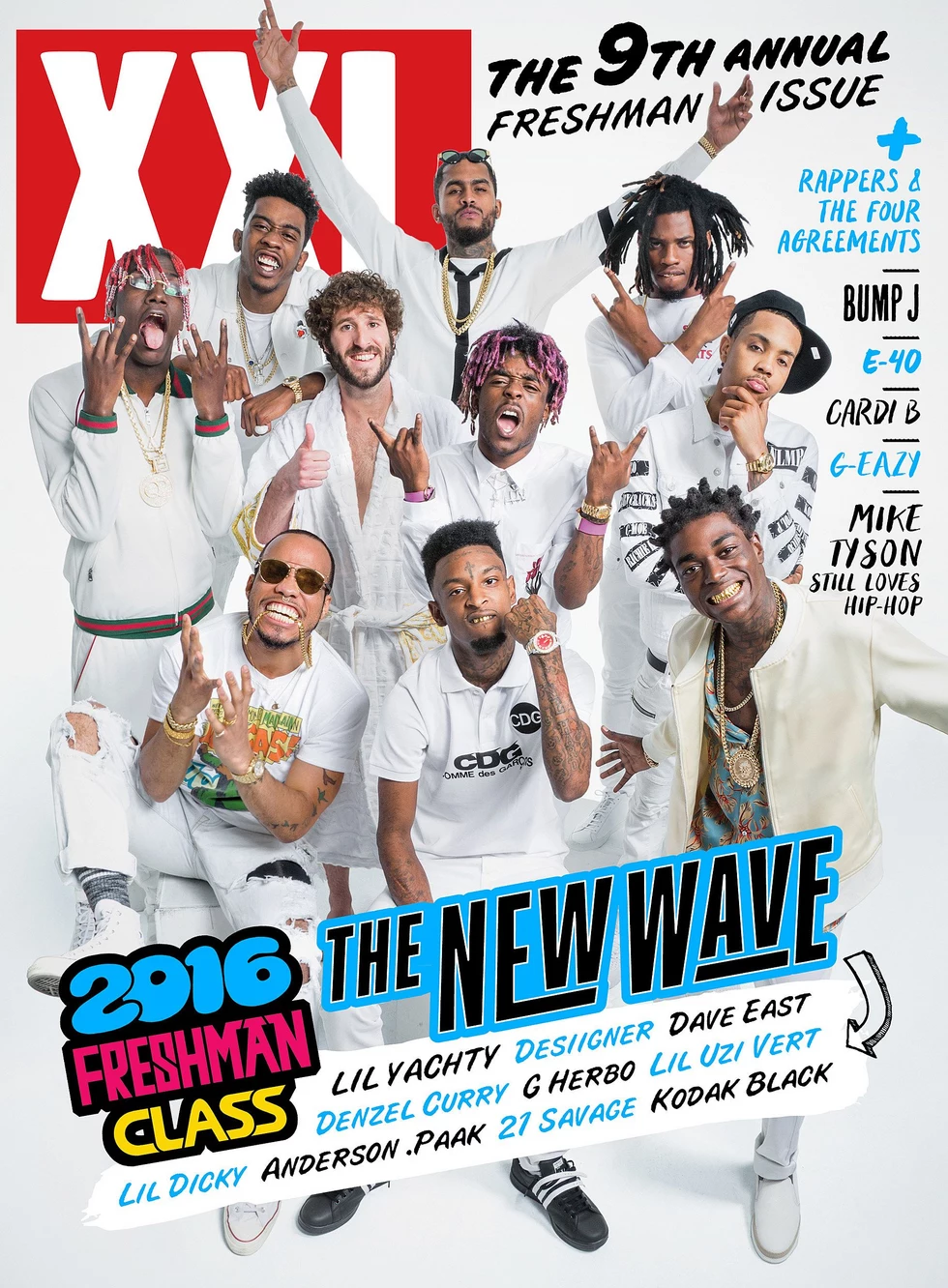
Ten years later, the 2016 XXL Freshman Class still defines rap's internet-era shift, from Lil Yachty and Uzi to 21 Savage and Kodak Black.
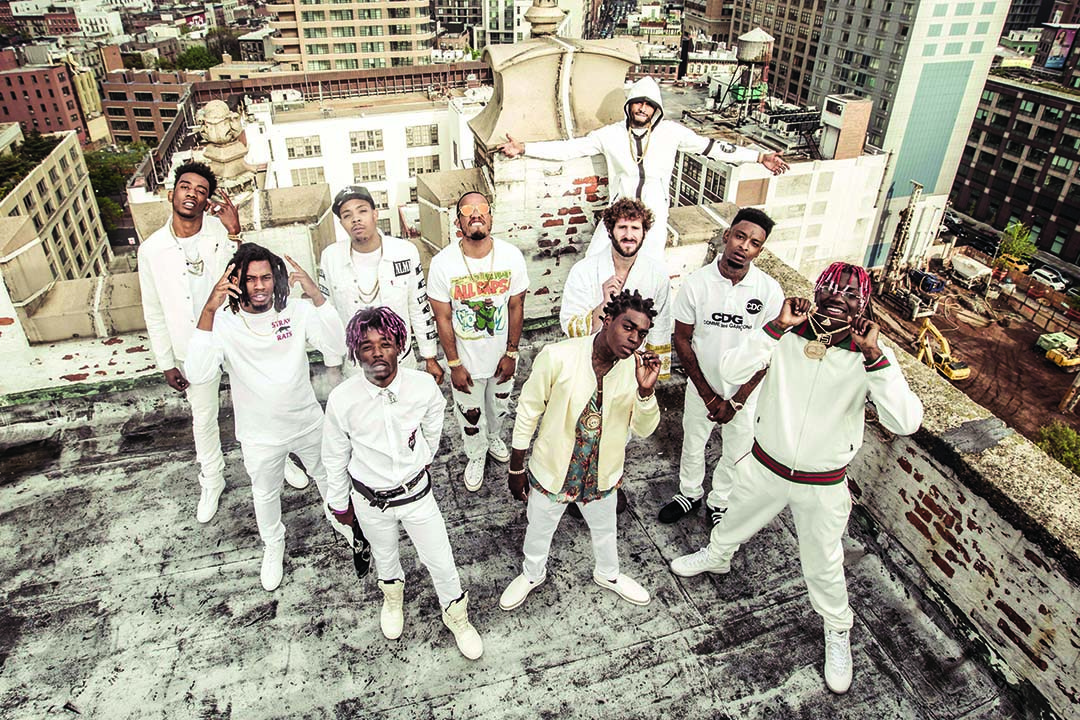
Ten years on, the 2016 XXL Freshman Class has become something close to rap folklore, the kind of lineup that can be recognized from a single image, a cypher clip, or, lately, even a tattoo. Last year, an artist known as A Husband At War on Instagram posted a giant photo-realistic piece recreating the class’s iconic cypher with 21 Savage, Lil Uzi Vert, Kodak Black, Lil Yachty and Denzel Curry. It raced across social media almost as quickly as the original video spread in the first place, which feels about right for a class that was built for the internet age.
That cypher has now pulled in more than 240 million views on YouTube. It has been praised, mocked, quoted, memed and argued over so many times that it has practically hardened into canon. More importantly, it came to stand in for an entire stretch of 2010s hip-hop, when purple hair, viral clips and rap stardom started to blur together and the old divide between music and the internet finally gave way. The 2016 XXL Freshman cover did not invent that shift, but it ended up being one of its clearest symbols.
During XXL’s annual Freshman selection meetings, the 2016 class comes up constantly. Artists asked to name their favorite Freshman crop often land there without much hesitation, and the year’s cypher resurfaces on X and Instagram like clockwork. One viral video even shows a father in a hospital playing the cypher for his newborn on his phone. That kind of afterlife says a lot. The class has been treated less like a magazine feature and more like a snapshot of a generation of artists fully stepping into their own identities just as they started altering the sound, style and personality of modern hip-hop.
“Even back when it was happening, I was looking around like, ‘Wow, this is loaded,’” Lil Dicky says over video chat in mid-June. “There’s a lot of people here that I find to be super-important artists, and as time went on, a lot of the people just kept getting bigger and bigger and bigger simultaneously. It was also just a really unique combination of artists. A guy like Anderson is so different from a guy like 21, who’s so different from a guy like me, who’s so different from a guy like Kodak. It’s just such a rainbow of colors on the spectrum of artists.”
What made the class feel so different then was, in part, how little it cared for the old rap script. In the early 2010s, the industry was still hunting for the kind of pre-irony archetypes embodied by Drake, Kendrick Lamar and J. Cole. The gangsta rap-versus-backpacker split had faded, but the pressure to project seriousness remained. The 2016 Freshmen were not interested in that. Kodak Black used his cypher verse to clown the producer for making a “sorry-a*s beat,” and the tone was set. These were not kids performing solemnity.
Before 2016, Freshman covers often looked like roll call for a blockbuster crossover cast. This one looked more like a group of troublemakers in the back row. Kodak Black, Lil Yachty, 21 Savage and Lil Uzi Vert arrived sounding and dressing like the students most likely to get sent out of class, not the ones aiming for polished symbolism.
Uzi and Yachty, with their purple and red dreads and narcotized melodies, pushed through trap with a surreal, neon sheen. 21 Savage’s murderous street rap and near-whisper delivery made him sound like he hoped nobody would call on him. Kodak came off like a street-rap blues singer, flashing his new grill with the kind of giddy pride a fifth grader might feel after braces come off. Desiigner leaned into a Freshman freestyle inspired by The Fairly OddParents. Lil Dicky positioned himself as the sarcastic White rapper. Then there were the more traditional stylists, G Herbo, Anderson .Paak, Dave East and Denzel Curry, the adults in the room by comparison.
That contrast created a visual jolt, but it also became part of the point. The class looked warped because rap itself was being bent in real time. The rulebook for stardom was getting rewritten in crayon.
Still, disruption on its own does not turn into a lasting shift without commercial momentum, and the 2016 class had plenty of that. Lil Yachty is the clearest example. Before being named a Freshman, he had already modeled in Kanye West’s Yeezy Season 3 presentation at Madison Square Garden. Months earlier, he had dropped out of college, moved to New York and spent time bouncing between couches while trying to rap full time. His SoundCloud single “One Night” was initially modest, then took off online after appearing in the viral comedy skit “When Bae Hits You With That ‘So What Are We?’” It was, in effect, a template for the TikTok sound era before TikTok existed: proof that timing, meme culture and the internet’s appetite for a strange little hook could help make a star.
By the end of 2016, Yachty had already linked with Nautica and Urban Outfitters on a retro capsule collection, appeared in commercials with LeBron James and fully embraced his self-appointed title of “King of the Teens.” He was no longer just a rapper. He was a model for what a rapper-influencer could become. While Yachty was changing the path to success, Uzi was changing the sound. A Future disciple with pop-punk instincts, elastic melodies and emo shading, Lil Uzi Vert folded those impulses into bright, stadium-sized trap. By 2017, he had platinum plaques for “You Was Right,” “Money Longer” and “XO Tour Llif3.”
Influence can be hard to isolate in real time, but Uzi’s presence in the middle of that moment helped open the door for the next wave of melodic rap stars. It is difficult to imagine XXXTentacion, Trippie Redd or Juice Wrld without the lane Uzi helped make feel normal through Luv Is Rage. Yachty and Uzi rewired both rap’s look and its routes to fame, while Kodak Black, G Herbo, Denzel Curry, Lil Dicky, Dave East and Desiigner helped keep the class tethered to regional traditions even as they bent them.
Kodak fused hard-edged Southern storytelling with warped melodic instinct, collapsing the gap between the old South and the internet-era South. Herbo sharpened Chicago drill with a precise, emotionally heavy approach. Curry drew from the sinister legacy of Three 6 Mafia and pushed it into something faster, sharper and more volatile. Dave East carried the New York freestyle tradition with obvious technical command, while Lil Dicky rapped like a souped-up Andy Sandberg with actual bars. Anderson .Paak became the left-field favorite whose range eventually outgrew the category, and Desiigner turned into a viral phenomenon almost immediately.
Elsewhere, the numbers tell their own story. 21 Savage has put 113 songs on the Billboard Hot 100, aided by a changing lyrical instinct, a strong ear for hooks and a reputation as one of rap’s most useful guest artists. Lil Uzi Vert has 114 Hot 100 entries and at least one No. 1 to his name, as does 21. Kodak, despite time away for prison stints, has scored four Hot 100 top 10 hits and established himself as one of the generation’s most emotionally affecting writers. Lil Yachty, once waved off as a face of the “mumble rap” moment, is now nearing 30 and has become one of rap’s most slippery creatives, trading verses with Drake and J. Cole, rapping over Statik Selektah production, helping craft a City Girls anthem and even releasing a project shaped by Michigan rap. He has also logged 24 Hot 100 entries.
Anderson .Paak’s trajectory may be the class’s most decorated. Since appearing on the cover, he has won nine Grammys, earned 15 nominations and formed the Grammy-winning duo Silk Sonic with Bruno Mars, all while moving comfortably between rap, funk, soul and R&B. G Herbo, who once filmed early videos in Chicago housing projects, has stayed locked in as one of the city’s premier lyricists and picked up multiple platinum plaques along with several top 10 entries on the Billboard 200. Lil Dicky did not stay as musically prolific as some of the others, but he made enough of a mark with viral records to pivot into television with Dave, the FX series loosely based on his own climb. Dave East, meanwhile, has kept pushing gritty New York lyricism while acting in Wu-Tang: An American Saga.
The class’s collective résumé is absurd by any standard. Its members average 16.9 million monthly Spotify listeners. So far, they have collected 236 RIAA-certified gold and platinum plaques, more than 280 Billboard Hot 100 entries, 32 Grammy nominations and 10 Grammy wins. That is not just a strong Freshman class. It is a pop-cultural engine.
What the 2016 XXL Freshman Class changed was bigger than a set of chart totals. It reshaped how rap was consumed and understood. After them, the gap between blue hair, Instagram virality and melodic street rap got close to nonexistent. Superstardom could come from an odd corner of the internet, at an odd time, if the song and the moment lined up just right. Rap no longer had to look one way or move through one pipeline.
“It meant something to me because I always thought it was really cool, but I didn’t think it was going to be the biggest Freshman cover or the most momentous,” Yachty says over video chat in June. “But I understand it based upon the time, which is 2016, the change in streaming services, the change in social media, period. And then the change in hip-hop. It’s like a bunch of elements that make this one cover so special.”
That is probably the cleanest way to explain why the class still keeps circulating. Irreverent, unpredictable and often funny in ways rap magazines were not always built to frame, the 2016 Freshmen became trailblazers without ever fully looking like one another. Ten years later, they read like the goofballs who grew up, the little brothers who turned into legends, the class clowns who somehow became corporations. For listeners who came up alongside them, revisiting that cypher can feel uncomfortably close to revisiting themselves.
And if the comments under the video are any indication, the ritual is not ending anytime soon. Every few dozen posts, someone still asks the same question: “Who’s here in 2026?”
Apparently, an entire generation.
XXL
The 2026 XXL Freshman issue is available to purchase here now as well as merch. In addition to interviews with the 2026 XXL Freshman Class and DJ Drama, there are also conversations with T.I., Swae Lee, Sexyy Red, Young M.A, Cash Cobain, Skilla Baby, Lil Tjay, high-profile defense attorney Brian Steel, singer-songwriter Odeal and more, plus a look back at what the 2025 XXL Freshman Class has been doing and explore the cultural impact of the 2016 XXL Freshman Class and where its members are today.