Physical Address
304 North Cardinal St.
Dorchester Center, MA 02124
Physical Address
304 North Cardinal St.
Dorchester Center, MA 02124
Latto dropped Big Mama on May 29 and on the track "Gimmie Dat" appears to respond to a leaked 2025 phone call starring Cardi B. The song turns a purse apology into a lyrical tally, and fans immediately weighed in on X.
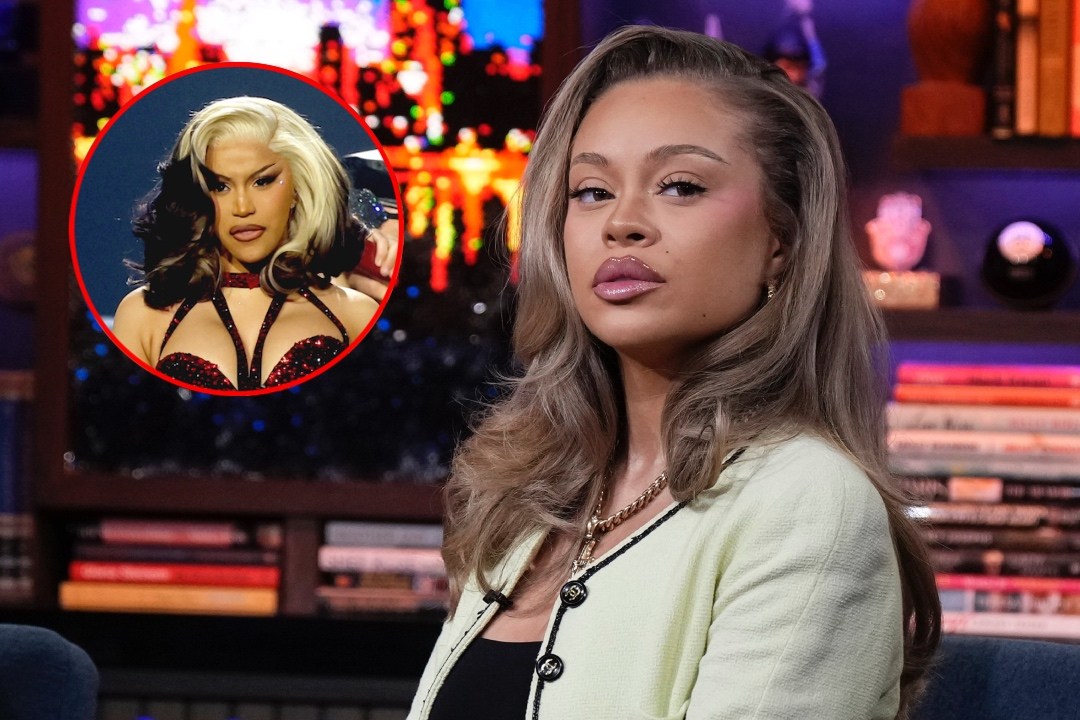
Rap feuds rarely live only in private anymore. They leak into group chats, become bite-sized viral moments and then arrive fully formed on record. Latto dropped Big Mama on May 29, a project she has framed as potentially her final LP, and on the bruising cut “Gimmie Dat” she seems to answer a messy, very public moment from earlier this year.
The catalyst was a leaked 2025 phone call in which Cardi B, in a heated rant about wanting to confront Ice Spice, said the line that dominated the chatter:
I ain’t pu**y a*s Latto
Cardi later issued an apology and even offered to buy Latto a purse to smooth things over. That gesture, however well-intended, landed oddly on social media — and Latto does not sound like she has entirely forgiven or forgotten.
On “Gimmie Dat” Latto snaps with the kind of casual, gloating detail that makes petty things sting. The section that has listeners pausing and replaying goes like this:
Bitch said what? Let’s clock it/Really got a Hermès store in my closet, Talkin’ ’bout buyin’ big mama a bag like my ni**a ain’t already bought it/Like my ni**a ain’t comin’ off racks/Big bank over here, big facts/Wish a bitch would get in that booth/I’m callin’ up PlaqueBoyMax.
It reads less like a headline and more like an exact reaction to the purse apology: dismissive, precise, a small threat wrapped in commerce. Latto pits ownership and currency against performative contrition; she turns the idea of a bought-off mistake into a line in a verse.
Elsewhere on Big Mama she leans on the swagger that carried her from the Bitch From da Souf era to mainstream radio with Big Energy. That arc matters here. Latto, who changed her stage name from Mulatto in 2021 amid conversations about responsibility and image, has spent the last few years balancing crossover ambitions with the stubborn territoriality of Southern rap. The Cardi moment complicates that: for all Latto’s pop crossover, this is rap’s old language of accountability and status.
Fans were immediate. On X one user wrote, “But let’s be realistic, Cardi said a lot of unnecessary stuff to her and she apologized like she said nothing. Saying you’ll buy her a bag is also disrespectful to latto and her man too!! I fw her for dissing Cardi.” Another commenter framed the leaked line as a humiliation that deserved response: “I mean cardi kinda deserved it that ‘I ain’t pu**y a*s latto’ must’ve been humiliating she gotta protect her image and this was a light whack she couldve been nastier.”
Speaking to the pattern of modern rap disputes, this exchange has all the familiar beats: a private insult becomes public, an apology follows, and an attempted peace offering gets folded back into lyrics as evidence that the matter was never settled. There is something theatrical in that loop — the apology, the purse, the verse — and Latto knows how to turn theater into leverage.
Whether this will spark a larger back-and-forth is unclear. Cardi has clashed with peers before and often moved quickly between apology and performance. Latto, for her part, has used confrontation as a device on record without letting it define her career: she still has a pop-rap single that streams in the millions and a history of collaborations that suggest she can pivot from beef to business.
At its best, Big Mama finds Latto settling scores with both economy and style; on “Gimmie Dat” she gives a small, precise answer to a disproportionate public moment. It feels less like an escalation than a ledger entry — a tallying of who said what, and an insistence that some things can be bought and some cannot.
Below, the song and social reactions continue to ripple. In rap, apologies and purses do not necessarily end chapters; sometimes they only write the next verse.