Physical Address
304 North Cardinal St.
Dorchester Center, MA 02124
Physical Address
304 North Cardinal St.
Dorchester Center, MA 02124
From DJ Kool Herc's Bronx block parties to Drake's celebrated Toronto nod, keys to the city have become a civic shorthand in hip-hop—public recognition that an artist's impact reaches beyond music and back into their hometowns.
Hip-hop has always measured success by more than record sales and streaming numbers. From DJ Kool Herc throwing the block parties in the Bronx in 1973 to today’s arena tours and political stances, one thread runs through the culture: a sense of obligation to the places artists came from. That impulse—giving back, visibly and publicly—sometimes looks like community programs or scholarship funds, and sometimes it looks like a mayor stepping forward with a small brass key.
The key to the city is an old, civic ritual that means different things in different towns, but the message is consistent: the recipient has mattered to a community in a way the municipality wants to acknowledge. For hip-hop figures, the gesture often reads as proof that the artist’s influence has moved beyond beats and bars to touch neighborhoods, economies, and local pride.
In practice the ceremonies are varied. Sometimes it’s a press-heavy proclamation at city hall, other times a quiet luncheon with community leaders and youth organizers. What they have in common is public recognition: not just of commercial success, but of a relationship between an artist and their hometown.
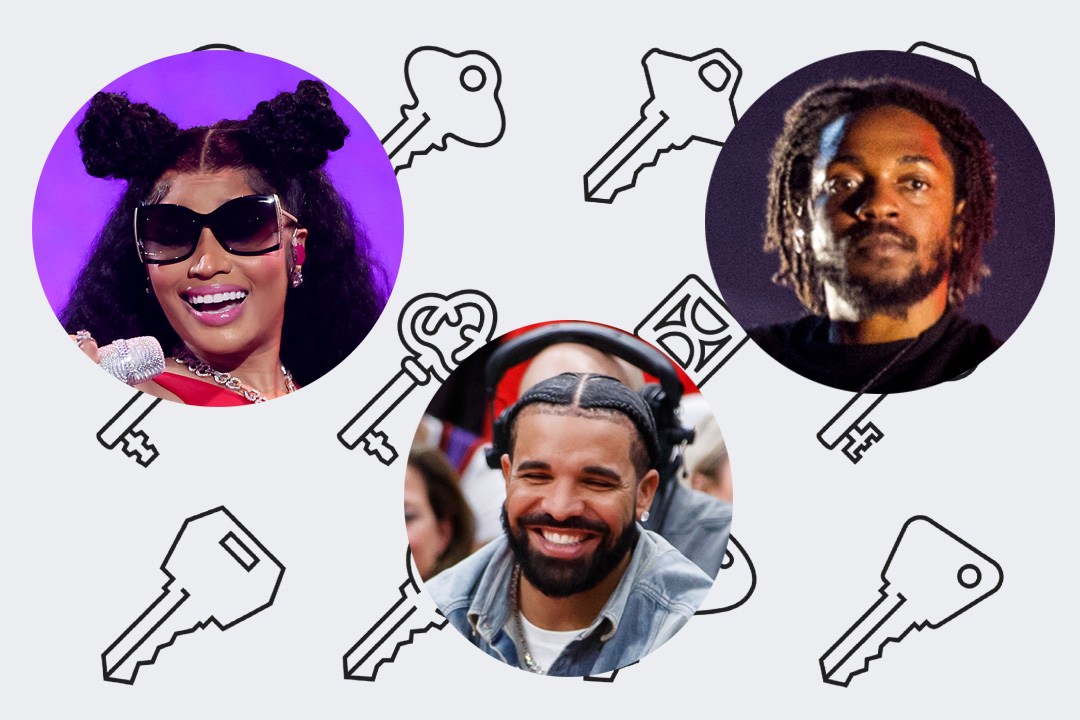
Look at some of the more visible examples from the last decade. When Nicki Minaj returned to Queens in 2017 she accepted a civic nod that folded together her role as an ambassador for the borough and her philanthropic gestures back home. In Toronto in 2016, Drake called his own key ‘one of the greatest moments’ of his life, a line that captured how much local validation can mean to an artist whose brand is so tied to place.
‘one of the greatest moments’
That same month, Compton framed Kendrick Lamar’s impact in almost academic terms. The city’s official language lauded him as ‘a phenomenal artist whose work has served as a catalyst to raise a new level of consciousness for this generation,’ linking his music directly to civic uplift.
‘a phenomenal artist whose work has served as a catalyst to raise a new level of consciousness for this generation’
Elsewhere, municipalities have extended keys to producers, label executives, and community-minded figures from the culture, signaling that the honor can recognize organizational leadership as easily as headline-making records. Those ceremonies often arrive after longer histories of local investment—a foundation, a school program, a neighborhood event—rather than a single chart hit.
Speaking to the symbolism, the key functions as shorthand: it codifies a relationship. For fans it’s affirmation that the places that raised an artist still get a piece of the spotlight. For cities it’s a moment to celebrate an export that has, in many cases, reshaped perceptions of the town itself.
The practice has its limits. A key to the city doesn’t erase complexities: it’s ceremonial, not legislative. But as hip-hop artists move into politics, restaurants, and media ownership, these civic honors often read less like a final accolade and more like a public checkpoint—proof that an artist’s reach now bends back to the block.
XXL and other outlets have kept tabs on these moments because they map a different kind of legacy: not just hits, but hometown investment. As the culture matures, expect cities to keep handing out keys—and for artists to keep treating them as visible proof that, no matter how far they travel, where they started still matters.