Physical Address
304 North Cardinal St.
Dorchester Center, MA 02124
Physical Address
304 North Cardinal St.
Dorchester Center, MA 02124
In a candid June 10 sit-down with Elsie Not Elise, Baby Keem insists he is better than members of rap's current big three, citing influences from Eminem to XXXTentacion and framing his latest album Ca$ino as evidence of a refusal to be boxed in.
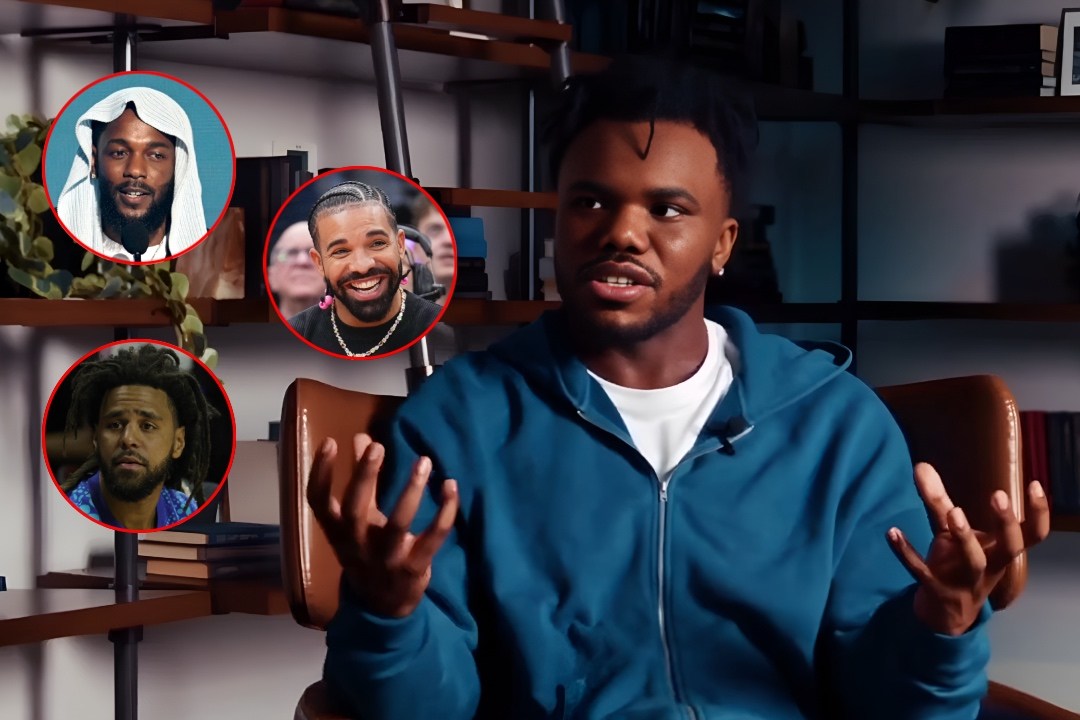
There is a ritual in hip-hop interviews where fame is measured by name-checking, and Baby Keem walked into that room smiling like someone who already read the script and circled the lines he wanted to say. The conversation with Elsie Not Elise, taped on June 10, feels less like a career moment and more like a manifesto delivered in a thrift-store suit and a steady, sardonic stare. He talks about Ca$ino with the kind of casual contempt reserved for people who think the scoreboard is only temporarily misprinted.
Speaking to Elsie Not Elise, the Las Vegas rapper did not wrap his ambition in humility. He said what everyone in the room was thinking but most artists mask as humility or irony. He did not tilt. He leaned in.
“No. I think it’s like a cop-out,” Keem said when asked if he wanted to be a figurehead on the level of Kendrick Lamar, Drake and J. Cole. “People should just stop saying that. I think music is…Let me reframe that. No. You’re putting boundaries on it.”
He pauses in the clip, throws a laugh that is half amused, half tired. Then he finishes the thought with another punch. It is one of those lines that lands because it is delivered like an observation rather than a claim. “I want to be one of the greatest of all time,” he continues, then slides into the controversial bit: “The new generation thing, I think I’m better than members of the current big three. I don’t view it like that. I never viewed it that way. Yes, there’s age, and there’s a new generation, for sure…I don’t want to be the best of the weakest. I want to be the best of the best. That should be the mentality of everybody coming up.”
There is no softening clause. The delivery is specific: calm voice, an index finger tapping the table, like someone counting off axioms. If you know Keem’s biography a little – the nephew-cousin angle with Kendrick Lamar that has loomed over his career – the comment reads both like revolt and like a family heirloom of ambition. He is rewiring the narrative handed to him by proximity and pedigree. He is also auditioning for a role he says he already occupies.
Elsewhere in the interview, Keem lays out the scaffolding of his sound with the bluntness of a producer marking a sample. He names inspirations openly and oddly – Eminem for technical jockeying, Ye for production theatrics, Lil Uzi Vert for melodic swing, and XXXTentacion for emotional bluntness. The move reads as cartography; he shows you the landmarks that built his road.
“Die for My B**ch was inspired by [XXXTentacion],” Keem explains. “In the fact that me being like, I don’t have to be a singer or just a rapper. I can do both at a high level.”
That line, about refusing genre boxes, is the most useful bit of specificity in the whole interview. You can hear it in Ca$ino, in the guitar-tinged choruses and the snap-snare punches that sit half inside trap, half inside a pop chorus trying to learn how to be mean. Production choices feel deliberate: clipped hi-hats, a snare that sounds like it’s been recorded through an old car radio, vocal cracks left intact like punctuation. Those are the kinds of little war wounds Keem wears as credentials.
Keem has a habit of speaking in absolutes, and that works for him. It also invites the necessary pushback. Claiming superiority over Kendrick Lamar is not just grandstanding; it is bait. You put a target on your back that way. If the aim is to accelerate conversation, he has succeeded. If the aim is to convince the people who keep score for a living, words alone will not do the job.
Speaking to Elsie Not Elise, the performance of confidence counted more than the math of it. Whether or not Ca$ino ultimately rewrites any of the hierarchies he named will be decided in playlists, festival slots, and the small cruelties of streaming algorithms. For now, the takeaway is simple: Keem wants the ring. He is telling us he believes he already has it, and he does not sound like someone who plans to wait politely for the world to agree.
Watch the interview to catch the exact cadence and the little conversational nudges that make his claims feel lived-in, not press-kitted. He throws out influences, he makes comparisons, he lets the camera linger on his grin. He is a generation younger than some of the names he is boxing himself against. He knows that. He says it out loud anyway.
There is arrogance here, yes. There is also craft – a generator of hooks, a producer who borrows textures, a rapper comfortable leaving seams visible so you can see how the thing was built. That combination is what makes declarations like this feel more like a provocation than a press release. Whether provocation will be vindicated or simply remembered as noise will show up later, in the places where music actually eats: stages, radios, playlists, and the slow grind of time.
It is a bold claim. He said it. The mic is still hot.