Physical Address
304 North Cardinal St.
Dorchester Center, MA 02124
Physical Address
304 North Cardinal St.
Dorchester Center, MA 02124
Sean Gathright, one of four men convicted in the killing of rapper Foolio, apologized to the victim's family during the penalty phase on May 12. Foolio’s mother read a statement asking the court to remember her son as more than an online image.
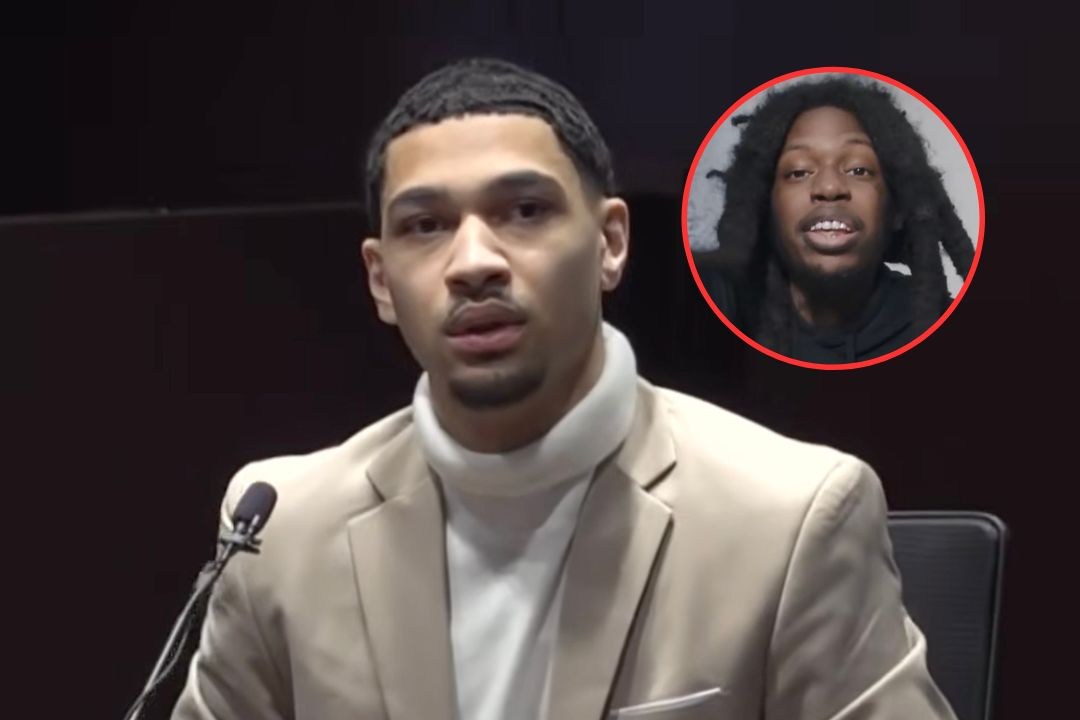
There is a rhythm to these courtroom moments now: a public accounting that is part confession, part performance, and almost always a ritual for the living. On Tuesday, the second day of the penalty phase for the men convicted in the ambush killing of rapper Foolio, that ritual arrived in a low, steady voice.
Sean Gathright, one of four men found guilty on May 8, took the stand and, visibly emotional, addressed the family of Charles Jones — the man the music world knew as Foolio. The scene was spare: a witness box, a victim advocate at the lectern, lawyers in dark suits, and the family watching. He did not offer a legal strategy or a flurry of mitigating facts. He offered an apology.
“I want to say my deepest condolences,” he told the court. “I understand that it’s hard losing a child, a best friend, a brother, a cousin. For that, I just cannot say sorry enough.”
Gathright acknowledged the likely consequence of the conviction—that he will spend the rest of his life behind bars—but promised to try to use incarceration to change himself. His voice cracked at points; there were pauses that felt like he was listening to the words as much as speaking them. Whether remorse on the stand will sway jurors weighing life without parole against the death penalty is a question of law and politics, not sentiment alone.
During the same hearing, a victim impact statement from Foolio’s mother, Sandrikas Mays, was read aloud by a court-appointed advocate. The statement, reported by the Tampa Bay Times and delivered in the quiet cadence of grief, pushed back against any single, flattened image of her son.
“Charles was more than what people saw online or heard in his music,” she wrote. “To me, he was my son, a human being with a heart, dreams, flaws and people who loved him deeply. He was a brother, a friend, an artist and someone who still had so much life ahead of him.”
“I ask the court to remember that Charles was a person whose life mattered. He was loved deeply and his absence has devastated our family.”
There are threads of familiarity here: the family’s plea to be remembered for more than an online persona, the defendant’s attempt at contrition, and the courtroom’s attempt to translate both into legal consequences. The four men convicted on May 8—Gathright, Isaiah Chance, Davion Murphy, and Rashad Murphy—now face a decision that could mean life behind bars or the death penalty.
Elsewhere in the case, the sentencing of Alicia Andrews, who was convicted of manslaughter last October in relation to Foolio’s death, was postponed. Andrews’ attorneys are seeking a new trial; the delay adds another procedural layer to a case that has already kept the family and the local rap community in a long, public grief.
Foolio—Charles Jones—was a figure whose music and social media presence had created a public persona that never quite matched the private contours his mother described. That dissonance is common in modern grief: a son known for his tracks and visuals reduced in some narratives to a headline. In the courtroom on Tuesday, his name reverted to the fuller, quieter thing it was in his family’s mouths.
Speaking to the atmosphere after the statements, a courthouse regular muttered that you could hear a pin drop when the victim advocate finished. There was no theatricality, no raised voices; just the slow business of weighing memory against punishment. For those following the case’s next act, the coming weeks will decide whether remorse, memory, and mitigation can bend a jury’s choice away from capital punishment.
The trial continues to unfold as the legal teams prepare final arguments and as family members continue to press the court for recognition of the life behind the headlines. For now, the apology on the stand and the letter from a grieving mother are the moments that will, in time, be measured against whatever sentence the court imposes.