Physical Address
304 North Cardinal St.
Dorchester Center, MA 02124
Physical Address
304 North Cardinal St.
Dorchester Center, MA 02124
Swae Lee weighs in on AI, rap groups, Drake’s three-album release, album sales, social media and more in a wide-ranging XXL interview.
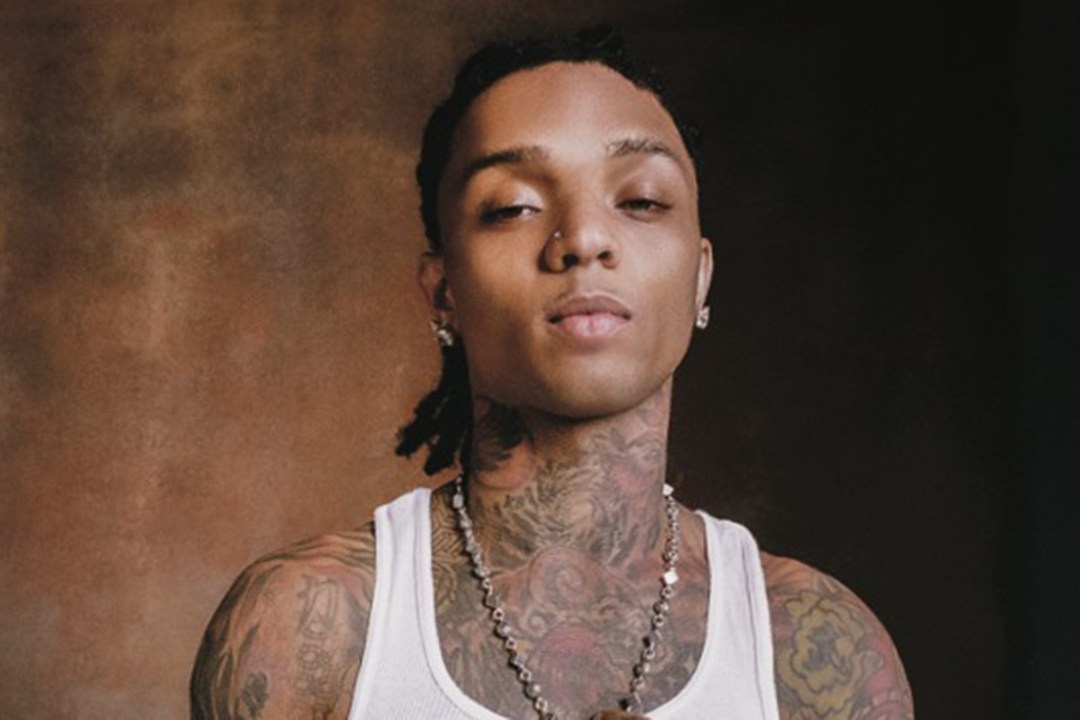
In rap, Swae Lee has spent the last 12 years functioning like a built-in accelerant. Since Rae Sremmurd broke through with “No Flex Zone” in 2014, the Tupelo, Miss. native has been the voice behind some of the era’s most durable hooks, the kind that can glide, sting or seduce depending on the record. Paired with Slim Jxmmi’s raspy, high-energy raps, his wispy tenor helped drive Rae Sremmurd’s run of Billboard Hot 100 hits, from “No Type” and “Throw Sum Mo” to “Powerglide” and “Swang.” “Black Beatles,” the duo’s 2016 single, went all the way to No. 1. On his own, Lee kept the streak going with multiplatinum moments like Post Malone’s “Sunflower” and French Montana’s “Unforgettable.”
Now 33, he’s in another stretch of output. In April, three years after Rae Sremmurd’s Sremm 4 Life, he rolled out Same Difference, his second solo project following Swaecation, which arrived as part of Rae Sremmurd’s triple LP SR3MM eight years earlier. Lee says he’s recorded more than 10,000 songs and has plans to flood the market while lining up a tour in the months ahead. Usually, he lets the music carry the conversation. Here, he gets direct about the bigger arguments circling the culture, from AI to social media to Drake’s recent three-album release.
On the state of rap groups in 2026, Lee points to something basic but stubborn: everyone wants control. “A lot of it is people want to do it themselves, and people might not see your vision. When you trying to convince somebody like, ‘Bro, we can do this. I do this part; you do that part. We can take it all the way to the moon,’ one person might see the vision and one person might not see the vision. [They] might not even believe in themselves like that.”
He keeps coming back to the idea that a collective only works when everybody is really on board. “You never know people’s motives. So sometimes, you just got to put it on your back and just carry it all the way up the mountain. But anytime you have a collective of people that want to do it together and just take the sh*t to the moon and put all their feelings to the side and just be unconditionally there for each other, that sh*t can really go. You got that much more of a chance of even making it as everybody know [their] role.”
Elsewhere in the conversation, Lee treats AI less like a threat than a coming standard. “I think it’s the world as we know it right now. So, right now we’re looking at like, Oh, this is weird, this is weird. There’s a 9-year-old kid growing up, and to him, all this is going to be normal. ‘Oh yeah, you can use AI to make a beat? Let me learn how to do this.’ ‘Oh, you can use AI voices? Let me learn this.’ He’s learning that normally as he comes up.”
He sees the trajectory clearly, if a little wildly: “This is just the next wave of where the world is at. So like it or not, ni**as got to get with it and figure out where it’s going. I see where this sh*t is going. It’s going to be AI voices and robots dancing, and this is an artist with a whole AI personality singing. They going to know his AI songs. We’re getting just [closer] to a futuristic world that we used to see in the movies. So, there’s going to be strip clubs, robot strippers, AI personalities.”
And because Lee is Lee, he’s already imagining how somebody might make money off it. “People need to just start capitalizing. We need to be the first ones opening these AI strip clubs. I might make a song and have a whole AI in the background, just sing my AI background vocals on every fourth bar. Muthaf**ka’s so smart. Every fourth bar is going to come in [with] perfect vocals. The muthaf**kas don’t make mistakes. [The] only people ain’t going to be replaced really are cosmetology people.”
Lee also pushes back on the old habit of treating sales figures like the only real measure of whether a project matters. “They do[matter], but they don’t. The vast majority of people want to just listen to it. They’re not thinking, ‘But he sold 17,000.’ Of course, [for] those people that are really into it, it could be a blemish on somebody’s image.”
Still, his answer is to keep moving. “But then guess what? Ni**a, we shooting again, again, again, again. No matter what, man, we keep it coming, and you just do the best. You push that sh*t. You got to put that muscle behind that sh*t. The people that’s supposed to love it, they going to love it. And the people it’s supposed to reach is going to reach. Boom. Next one, ni**a, you might go to the moon with that sh*t. It’s like you keep digging for them diamonds.”
That same patience applies to songs that take their time. “Once the project is out, they can always go back and catch up to it. So, it’s fair. And I look at it like a lot of songs, even in my career, they took six months to blow up. So, they ain’t blow up ’til way later. And I’m like, man, I ain’t even worried about this song no more, and it blow up. It’s just like, what the f**k?”
He’s even more dismissive of the internet’s favorite sport: outrage. “You can’t really take it to heart. You got to realize, man, the muthaf**ka that might have typed some negative sh*t about you could be a fat slob who never got no pussy. So, these the type ni**as that’s writing this sh*t so openly, too. ‘Oh, this music sucks.’ ‘F**k him. He’s a bad person.’ Muthaf**ka, you got to put a camera on the person that wrote that sh*t. Nine times out of 10, it’s going to be the worst kind of person you ever seen. The people that you don’t see in the streets, it’s going to be the people, the creeps.”
He says online negativity is usually just noise moving through bigger headlines. “So, you got to know 80, 90 percent of the negativity on the internet is people like that. People with no lives. For the most part, the sh*t that’s happening is big, huge topics every week, just switching up the talking points that people have. Whether it’s celebrity drama, f**king wars, shootings, whatever it is. F**king people getting married. So-and-so dropping the album, it’s so much sh*t that’s just taking people’s attention.”
And if the conversation is all about attention, Lee knows how the system works. “You can just keep rebranding yourself. You can drop a positive headline about yourself. You can control your narrative on social media. That’s the thing, too. You can pay the blogs to say, if I wanted to right now, I could say, ‘Swae Lee working on 32-song [album] with features from Michael Jackson, reportedly.’ So, I think social media is a tool and definitely play into it.”
One move Lee clearly respects is Drake’s decision to release three albums at once. “For [an artist] as big as Drake, that was smart as f**k. That was hard. And I don’t really think nobody did that before that sh*t. And when you that caliber artist, these people [are] really fans of you. I don’t think a true fan is not going to say anything is too much music. That’s a feast for you. Imagine if that was food. You getting three f**king courses at a restaurant you love. Drake is a restaurant they love. They not going to turn it down, all this music.”
He frames it as a fan-service move, not overkill. “If I was a fan of somebody, I would love that. ‘Damn, this ni**a just gave us three albums.’ I been waiting on one album and you getting three albums. Are you really a fan if you get mad about that? It’s going to be copycats. There’s going to be people who might even drop four [albums] saying, ‘Oh, drop four.’ But you never know how it’s going to go. We’ll see.”
That appetite for more also shapes how he thinks about release schedules. “I don’t think you should take breaks. Everybody should do what’s right for them, but I think the more you feed them, the better. And we only getting older. Keep them fed and just keep showing them what you working on. I think that’s always better.”
He notes that label rules can slow things down, but says his own instinct is to stay active. “Depending on what your label situation is, too, you never know. Sometimes, artists can’t even drop until [after] six months. I think I had some sh*t where I could only drop every six months. But where I’m at right now, I want to just lock in and drop every f**king month. It is an oversaturated market. So, everybody’s dropping, new artists [are] emerging. People want to try to be an artist. [I] think you just drop more [frequently], for sure.”
Asked about artists earning in a recession, Lee’s answer is blunt and practical. “You can do f**king birthday parties, whatever the f**k you got to do. Streaming. Really, you need to get them shows. That’s what you got to get. That’s going to get you that money in your pocket. Hundred bands, 200 bands. You set.”
He expands the playbook from there: “Once you getting them shows and tours, festivals, you just have to have your brand right. Brand deals, your Walmart sh*t. You can really keep the sh*t going. [If you’re a] small-time artist, [it’s] club appearances, schools, getting little bookings at pep rallies and stuff. You can get out there and sell CDs if you need to.”
And if all else fails, there’s always the internet. “Learn how to get your sales pitches. Boom. Instagram, of course you got Instagram Live. You can stream. They got streaming now. You can just do that on the side. Set that up while you try to blow up on your rap sh*t. Make the fans make it normalized with your brand so you streaming and rapping. ‘OK, this is the new artist. He’s streaming and rapping.’ Boom. [You’re] making money on streaming. Instagram, TikTok Lives, make money off that. You can make minimum wage streaming if you get some minimum motion.”
As for the long gaps between releases that still define a lot of careers, Lee doesn’t sound like a fan. “I don’t think you should take breaks. Everybody should do what’s right for them, but I think the more you feed them, the better. And we only getting older. Keep them fed and just keep showing them what you working on.”
He says he used to be tied to a slower schedule, but would rather move at a monthly pace now. “I think I had some sh*t where I could only drop every six months. But where I’m at right now, I want to just lock in and drop every f**king month.”
Even privacy, for Lee, is less about withholding than deciding what matters. “I be feeling like I don’t never really bring them [the fans] a lot in my lifestyle or in my life. My sh*t be like a movie every day. Something crazy happening every day. But with me, I just try to give them music, but I feel like it can definitely be healthy for an artist-fan relationship. Just bring them into your personal life, let them know you more. But also, keeping them music-focused and just giving them what they really love.”
He says the rest should come naturally. “Then, what they see naturally from fans or from me moving around the streets, that’s fire, too. Just keep up with me if you really want to know me on a personal level. I’m going to always make time to give them personal moments, and when they see me in their city, I f**k with them.”
The 2026 XXL Freshman issue is available to purchase here now as well as merch. In addition to interviews with the 2026 XXL Freshman Class and DJ Drama, there are also conversations with T.I., Sexyy Red, Young M.A, Cash Cobain, Skilla Baby, Lil Tjay, high-profile defense attorney Brian Steel, singer-songwriter Odeal and more, plus a look back at what the 2025 XXL Freshman Class has been doing and explore the cultural impact of the 2016 XXL Freshman Class and where its members are today.